PayPal Unbanked and Online Banking Bonus Guide
This guide explains PayPal Unbanked alongside practical steps to choose U.S. bank accounts online and navigate account-opening bonuses. “PayPal Unbanked” refers to an approach for people who want payment access without a traditional bank account. Objectively, online banking promotions typically require meeting direct-deposit and time-window conditions, while compliance and eligibility can vary by institution.
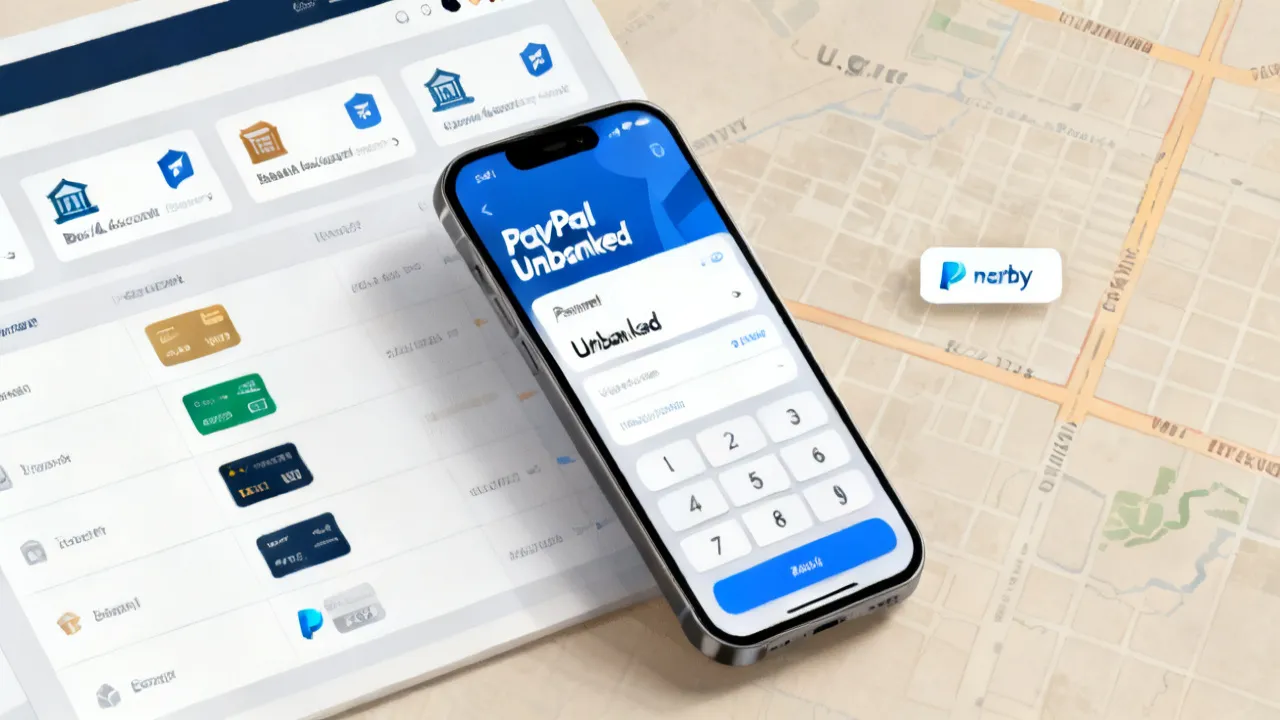
PayPal Unbanked and Online Banking: Start With Eligibility, Then Optimize Bonuses
If you’re exploring PayPal Unbanked because you want payment access without relying on a conventional bank relationship, it’s essential to understand how bank accounts online bonuses are usually structured—especially the role of direct deposit, the time window, and the account type you open. From an industry perspective, the very reliable way to benefit from account-opening promotions is to match your income workflow to each bank’s requirements before you submit an application.
In other words, start with your reality (how you get paid, when it posts, and whether you can route payroll to a new account). Then select offers that align with that reality. When you do that, you reduce the most common reasons people lose bonuses: missing the enrollment step, misunderstanding what counts as a direct deposit, and timing deposits outside the qualifying window.
What “PayPal Unbanked” Generally Means in Practice
PayPal Unbanked is commonly described as an option intended to help people manage funds and payments without a traditional bank account. In practical terms, users may aim for:
- Making payments and receiving money in a way that doesn’t require a standard checking relationship.
- Convenient access through the PayPal ecosystem.
- Lower friction for individuals who are still building their banking history or prefer payment tools that operate independently.
People often start with a payment-first strategy because it feels immediate: you can receive funds, send payments, pay bills in some form, and transact with less banking friction. But if the ultimate goal is to unlock higher-value financial benefits—like competitive savings, better bill-pay control, and bank account opening bonuses—then it becomes necessary to understand how the banking system expects money to arrive (typically through direct deposit).
For readers considering a bridge toward full banking, the key question becomes: Do your monthly inflows (like salary or benefits) support direct deposit? That answer often determines whether you can unlock bank account-opening bonuses that rely on direct-deposit activity.
It’s also worth noting that “unbanked” is often a spectrum rather than a binary state. Someone might not have a long banking history, might rely heavily on cash or payment apps, or might have had issues opening conventional accounts previously. In those cases, the best path usually involves: (1) ensuring you have safe payment rails day-to-day, (2) establishing a new direct deposit path when possible, and (3) applying for banking promotions only once you understand how the bank defines a qualifying deposit.
Industry Context: How Bank Account Bonuses Work (Objective Overview)
Major U.S. banks frequently offer promotional incentives when customers open a new deposit account. These incentives are typically contingent on one or more of the following:
- Direct deposits posted within a set number of days after account opening.
- Minimum total deposit amounts across one or more pay cycles.
- Qualifying account types (e.g., checking vs. checking/savings bundles).
- Promotion terms such as new-customer eligibility, offer-specific enrollment, and geographic constraints.
Regulators and industry bodies note that promotional offers should be interpreted strictly according to official terms. For readers who want reliable expectations, the top practice is to review the bank’s offer page, confirm direct-deposit mechanics (including employer payroll settings), and verify the deposit posting timeline.
To make this more practical, think of bonus offers as a “rule engine.” Your job is to ensure every rule is satisfied. Most offers have hidden operational details that affect whether deposits count:
- Timing rules: when the account is considered open, when the bonus period starts, and when deposits must post.
- Source-of-funds rules: what the bank classifies as a qualifying direct deposit.
- Routing rules: whether the deposit is routed correctly through the bank’s direct deposit system.
- Transaction-type rules: whether external transfers or cash deposits are excluded even if they increase your balance.
- Account standing rules: whether the account must remain open and in good standing through the time bonus is credited.
Therefore, the “bank accounts online” aspect matters too. Online opening is usually only the first step. Many of the best offers require you to complete enrollment, receive deposits that post correctly, and sometimes meet additional conditions after your deposits qualify.
Major Bank Comparison (Account Type vs. Bonus Condition vs. Bonus Amount)
Below is a compact comparison of major U.S. banks and typical promotion structures that can be relevant if you’re transitioning from a PayPal Unbanked-style setup into traditional bank accounts online. The table keeps to three columns and focuses on the core elements very readers evaluate.
| Bank / Account Offer | Bonus Condition (Direct-Deposit Window) | Bonus Amount |
|---|---|---|
| Bank of America — Personal Checking Account | Deposit at least $2,000 in direct deposits within 90 days | $200 |
| Chase Bank — Total Checking Account | Make at least one direct deposit within 90 days | $300 |
| Citibank — Regular Checking Account | Complete two direct deposits totaling $6,000+ within 90 days | $450 |
| Wells Fargo — Everyday Checking Account | Deposit a total of $1,000 in direct deposits within 90 days | $300 |
| SoFi Bank — Checking and Savings Account | Deposit $1,000 for $50 bonus or $5,000 for $300 bonus in direct deposits | $50–$300 |
| Capital One Bank — 360 Checking Account | Use promo code REWARD250; make two $500+ direct deposits within 75 days | $250 |
Links (source of the table information):
source: www.bankofamerica.com/deposits/checking/, accounts.chase.com/consumer/raf/online/rafoffers?key=1934238931, online.citi.com/US/ag/banking/checking-account, www.wellsfargo.com/checking/, www.sofi.com/banking/, www.capitalone.com/bank/checking-accounts/online-checking-account/
(Source indicated above; these are the official offer pages used to compile the comparison.)
How to Earn Major U.S. Bank Account-Opening Bonuses (Step-by-Step)
From an industry-expert lens, the difference between “eligible” and “rewarded” is often operational: timing, deposit routing, and documentation. Use the steps below to improve your odds when you transition from a PayPal Unbanked-oriented workflow to bank accounts online that require direct deposit.
The goal here is not only to “open an account,” but to make sure the bank can verify that you satisfied the exact chain of requirements. Many people treat account-opening bonuses like a simple checklist. In practice, it’s more like project management: you are coordinating account setup, enrollment, payroll changes, and deposit posting—while ensuring no step breaks the chain.
Step 1: Confirm you meet “new customer” and enrollment rules
Many offers specify who qualifies (for example, truly new account holders) and whether you must enroll before funding. If you open the wrong product variant or miss an enrollment step, the bank may not award the bonus even if you meet deposit amounts.
This matters particularly if you have prior relationships with the bank. Some offers restrict eligibility for customers who previously had certain types of accounts. Others restrict eligibility for anyone who has a relationship that conflicts with the promotion (for example, existing accounts, credit card-linked deposit accounts, or prior bonus history).
Before you open, verify:
- Your eligibility status (new-customer rules, prior account history).
- Whether you must enroll in the offer (and whether enrollment is tied to a specific link).
- Whether the offer is national or region-specific.
- Any product-code requirement that you select during application.
If you do not meet these requirements, the deposit timing won’t help; you can “do everything right” operationally and still not receive the bonus.
Step 2: Choose an account type that matches your inflow pattern
Look at how your money arrives each month. If you receive a salary, pension, or benefits via direct deposit, you can structure deposits to meet the bank’s timeline (e.g., “within 90 days” or “within 75 days”). If your inflows are inconsistent, consider whether the offer’s deposit thresholds are realistic.
Many banks have multiple account variants—some have qualifying bonus terms and others don’t. A very common mistake is opening the right bank but the wrong account tier. For example, an offer might require a specific “checking” product, while you accidentally open a “basic checking” or another bundle that doesn’t match the promotional terms.
When matching an account to inflow patterns, consider:
- Pay frequency (weekly, biweekly, semi-monthly, monthly).
- Typical deposit size (per paycheck amount vs. total deposit requirements).
- Posting delays (payroll calendars can cause a few days of difference between expected and actual posting date).
- Expected stability (temporary jobs vs. ongoing benefits).
In other words, treat the bank offer like a financial math problem. Your job is to prove that your deposit schedule fits within the time window and hits the minimum amounts (and that your deposits qualify as direct deposits).
Step 3: Verify direct-deposit eligibility with your payroll provider or sender
Before the offer window starts, confirm the following:
- The account supports direct deposit using the bank’s routing and account numbers.
- Your employer (or benefits provider) can switch your deposit to the new account promptly.
- You understand typical posting delays (some deposits post earlier, others later depending on the payroll calendar).
This step is where PayPal-to-banking transitions often succeed or fail. With payment apps, deposits may come from different pathways. With bank account bonuses, the bank is looking for a specific type of ACH-style payroll deposit that it recognizes as direct deposit.
Ask your payroll provider (or whichever agency handles benefits):
- When is the cutover date for direct deposit changes?
- Will the first paycheck after the change post on the typical payroll date?
- Does the payroll provider use the routing/account numbers exactly as you provide them?
- Is there a confirmation method to verify the new direct deposit information is correct?
Also, keep your own verification checklist. If a deposit fails to appear, you want to quickly determine whether the issue is:
- Incorrect routing/account numbers
- Payroll not cut over yet
- Deposit posted but classified differently
- Account verification/hold delays
The more you can clarify in advance, the less likely you are to miss a bonus window.
Step 4: Plan deposits to satisfy the exact threshold
Promotions often depend on either:
- At least one direct deposit (simpler threshold), or
- Total deposits across one or more transactions (more complex threshold), or
- Minimum $ amounts per deposit (common in multi-deposit offers).
For example, a promotion requiring two $500+ deposits within a shorter window demands careful scheduling. If your pay frequency or timing doesn’t align, you could miss the incentive.
To optimize this step, map your paycheck schedule against the offer timeline:
- Mark your account opening date.
- Identify when the bonus eligibility window begins (some offers begin the day the account is opened; others begin after enrollment).
- List your next few expected direct deposit dates.
- Calculate whether those deposits will meet the per-deposit minimums or total deposit minimum.
It can also help to consider “what if” scenarios:
- If the first paycheck posts a few days later, will you still be within the window?
- If you miss one deposit because your payroll doesn’t cut over in time, do you have enough subsequent deposits to still qualify?
- If deposits are slightly smaller than expected, can you still reach the total minimum?
Remember: many promotions are strict. A deposit that posts one day late may not count. A deposit that’s classified incorrectly may not count. Planning for margin reduces your stress and improves your odds.
Step 5: Keep a timeline log during the promotional window
Maintain a simple record:
- Account opening date
- Date you submitted payroll/direct-deposit changes
- Date each deposit posted
- Running total (if the offer requires totals)
This helps if the bank later asks for clarification or if deposits appear to post outside the expected window.
In practice, this log becomes extremely useful when you have multiple banking promotions running at once, which many people do. If two banks both have deposit windows overlapping, you want to clearly know which deposit applies to which offer.
Consider documenting:
- Screen captures of enrollment confirmation
- Confirmation letters/emails from your payroll provider (if available)
- Bank statements showing deposit posting dates
- Bonus status messages in your bank portal
Even if you never need to escalate to customer service, a log helps you catch problems early—like a deposit that posted but didn’t qualify as a direct deposit.
Step 6: Meet any code or promo-code requirement early
Certain promotions require entering a specific promo code during application (e.g., Capital One’s promo-code style requirement in the provided offer). If you forget, the deposit activity alone may not trigger the bonus.
Promo-code failures are a surprisingly common reason people lose bonuses. Common pitfalls include:
- Entering the promo code incorrectly (typo, missing character).
- Applying through a different link than the one tied to the offer.
- Changing account type mid-application, which can invalidate the promo code association.
- Completing the application on a different browser/session where the promo code isn’t preserved.
To reduce these risks:
- Keep a copy of the offer link and promo code details.
- After submitting, confirm within the bank portal that your offer is attached to the correct promotion.
- Take a screenshot or save the confirmation details for your records.
Step 7: Watch for bonus posting and account standing terms
Bonuses are frequently credited after you meet conditions, sometimes after an additional verification period. Also review whether the offer requires the account to remain open for a set time or remain in good standing (e.g., no closure immediately after qualifying deposits).
Many people assume that once deposits qualify, the bonus will appear immediately. In reality, it often follows a schedule:
- Some bonuses are credited within days of meeting conditions
- Others are credited after the full window ends
- Some require an additional “bonus processing” step
Also check standing requirements. If you close the account immediately after meeting deposits, some banks may reverse the bonus or deny it at processing time. Therefore, plan your account retention timeline accordingly. If the offer says you must keep the account open until the bonus is paid, then do not treat the account as temporary.
Step 8: Avoid mixing multiple new-account bonuses without checking terms
Some offers can be limited by how frequently you’ve opened accounts, or by whether you’ve previously held similar products. When stacking incentives, read eligibility constraints carefully—otherwise you can end up meeting deposit requirements without receiving a reward.
Stacking bonuses can be a legitimate strategy. However, it requires careful attention to:
- Whether you can have more than one bonus per household or per individual
- Whether the bank counts prior account history with affiliates
- Whether “new customer” eligibility is determined at the time you open the account or at the time you receive the bonus
- Whether the bonus is tied to one specific product variant
- Whether the bank requires a minimum account age or minimum time in good standing
Additionally, consider your cash-flow constraints. Even when deposits qualify for bonuses, you still need to have the funds to do it responsibly. Overextending yourself while juggling multiple account openings can create hardship—especially if you rely on small margins.
Expert Guidance: Positioning PayPal Unbanked vs. Traditional Bank Accounts
As a practical framework, think of PayPal Unbanked as a payment-access layer, while traditional bank accounts online are closer to the good financial infrastructure used for salary deposits, bill pay, savings, and credit-building workflows.
An industry-consistent approach is:
- Use payment tools to cover day-to-day transactions while you stabilize your inflow.
- Open a qualifying checking account once your direct deposit plan is clear.
- Apply for bonuses strategically when your payroll cadence makes the threshold achievable.
That’s the general idea, but there’s also a tactical way to transition from payment-first to banking-first without creating disruption.
One useful method is to treat the banking account as a “receiving and organizing” account, while your payment tool remains your “spending and transfer” channel. You don’t necessarily need to instantly move everything to the bank. You can:
- Route salary to the bank account to qualify for direct deposit requirements.
- Move a smaller portion to the payment ecosystem for daily spending.
- Keep the majority in the bank for stability, bill payments, and savings.
This approach can reduce the chance that you face unexpected limitations during the transition—like temporary holds, new-account restrictions, or challenges verifying payee information.
Operational Considerations When You Switch Deposit Channels
Switching direct deposit can introduce friction. For objective risk management:
- Verify timing: payroll changes often take effect on a future pay cycle.
- Minimize disruption: if possible, avoid changing both account and payment method simultaneously.
- Confirm posting: ensure deposits are recognized as direct deposits, not as external transfers.
- Understand limits: some institutions may cap certain account behaviors early on.
It’s important to recognize that banks do not always interpret incoming funds the way a user might assume. A payment app transfer into a bank might be categorized as a transfer rather than payroll direct deposit. Meanwhile, direct deposit from an employer/agency is typically categorized as a payroll deposit. That classification affects bonus eligibility.
Another practical issue: some people attempt to “simulate” direct deposit by using third-party funding methods. Even when funds appear in the account, they might not meet the bank’s definition of direct deposit, and you might lose the bonus. The safest operational principle is: if the promotion says direct deposit, then the deposit should originate as employer/benefits payroll direct deposit, not as an external transfer you made manually.
If you need a smoother transition, build a short overlap period where:
- Your previous deposit channel continues for one pay cycle
- Your new direct deposit channel takes over in the following cycle
- You confirm the first deposit posts cleanly before making further changes
This overlap reduces the chance you’ll face a gap in funds. In a bonus strategy, missing a single pay cycle can be the difference between qualifying and not qualifying, especially when offers require multiple deposits within a narrow window.
Designing a Bonus Optimization Plan (Practical Math + Real Life)
To optimize bonuses when moving from PayPal Unbanked to traditional banking, you need two things: (1) correct understanding of offer terms, and (2) a plan that fits your actual pay schedule.
Here’s a practical approach you can apply to most offers:
1) Build a “direct deposit calendar”
Create a calendar with expected deposit dates for the next 75–90 days. Then mark the likely “cutover date” when your employer/benefits updates take effect. You’ll likely have something like:
- Week 1–2: changes submitted
- Week 3–4: first paycheck potentially arrives
- Week 5–8: subsequent paychecks arrive
Even if your exact dates vary, the calendar helps you determine whether you can hit “one direct deposit,” “two direct deposits,” or “total deposits” requirements.
2) Translate the offer into deposit math
Examples of offer math include:
- One deposit threshold: if you receive a paycheck of $X, confirm whether $X meets any minimum per-deposit amount.
- Total deposit threshold: if the offer requires $1,000 in direct deposits, check how many pay cycles it will take for your net deposits to reach $1,000 (and whether any deposits are delayed).
- Two deposit minimums: if the offer requires two deposits of $500+ each, ensure that your paycheck amount (after any deductions) stays above $500.
Important nuance: payroll deposits often reflect gross minus deductions (depending on how you view the deposit). The bank sees the ACH deposit amount you receive—not your gross earnings before deductions. So estimate based on what you actually receive.
3) Add a buffer for “posting delay risk”
Sometimes deposits post on the expected date; sometimes they post a day earlier or later, depending on the payroll schedule, ACH processing time, and bank posting cutoffs. If the offer is strict, you should add buffer time in your plan.
One way to add buffer is to choose offers where your deposit schedule easily exceeds the minimum number of qualifying deposits. For instance:
- If an offer requires one direct deposit, choose a plan where you expect at least two pay cycles to post within the window, giving you a safety margin if the first one is late.
- If an offer requires two deposits, ensure you expect three deposits in the window if possible.
This is especially helpful if you’re transitioning directly from a payment-first situation where you might experience delays in changing payroll or benefits accounts.
4) Decide whether to keep PayPal as a separate spending layer
Many people worry that moving money away from PayPal might reduce flexibility. In reality, you can keep using PayPal for transactions while still routing direct deposits to your bank account.
A common “balanced setup” might look like:
- Paycheck posts to bank account (qualifies for bonus).
- You transfer a small amount to PayPal for day-to-day spending.
- You pay bills from the bank account for stability and simpler tracking.
That separation often reduces the operational complexity. You avoid relying on PayPal for direct deposit bonus requirements, but you still maintain the lifestyle convenience that made you choose PayPal in the first place.
How to Prevent the Most Common Bonus Failures
Even when you understand the steps, mistakes happen. Below are the most common reasons people don’t receive a bonus, and how to prevent them. This section is especially useful if you’re trying to go from PayPal Unbanked to banking without losing momentum.
Failure Type A: Deposits don’t count as direct deposits
This is one of the most common issues. The deposit may arrive, but it might be categorized as a transfer rather than payroll direct deposit. To prevent this:
- Ensure the deposit comes from your employer or benefits provider through direct deposit instructions.
- Avoid “manual funding” methods that the bank might classify as transfers or third-party credits.
- Check the deposit description on the bank statement (when available).
Failure Type B: Missed enrollment or wrong offer link
If the bank requires enrollment, deposit activity alone may not qualify you. To prevent this:
- Enroll immediately after opening and confirm the offer status in the portal.
- Keep a record of the enrollment confirmation.
Failure Type C: Timing mismatch (post outside the window)
Deposits may post after the window due to payroll cutover timing or posting delays. To prevent this:
- Submit direct deposit changes early.
- Use a deposit calendar and include buffer pay cycles.
- Document deposit posting dates to understand if delays are predictable.
Failure Type D: Account closed before bonus is processed
Some people qualify quickly and then close the account to simplify life. But if bonus processing takes longer, the bonus can be denied. To prevent this:
- Keep the account open until the bonus posts and any additional standing period is satisfied.
- Read the “bonus payment timeline” carefully in the offer terms.
Failure Type E: Wrong account product variant
This can happen during online account opening if you select an account option that seems similar but doesn’t match the offer terms. To prevent this:
- Cross-check the product name exactly against the offer terms.
- Double-check that the account type is the one tied to the bonus.
Failure Type F: Bonus stacking eligibility misunderstandings
When multiple bonuses are in play, it’s easy to assume everything will work. But some banks restrict bonus eligibility based on prior accounts or frequency of openings. To prevent this:
- Read the full eligibility language on each offer page.
- Confirm whether the restriction triggers at opening time or at bonus credit time.
- Keep a “team schedule” if you are juggling multiple institutions.
FAQs
1) What is the relationship between PayPal Unbanked and bank account-opening bonuses?
PayPal Unbanked is generally positioned as a payment access option without needing a traditional bank account. Bank account-opening bonuses, however, usually depend on direct deposit rules and account eligibility. They are not automatically connected; you would typically use PayPal for payments while using direct deposit into a traditional bank account to qualify for bonuses.
2) Can I qualify for a bank bonus without using PayPal Unbanked?
Yes. Very bank offers depend on direct deposit activity and account enrollment. PayPal usage is usually not a requirement for the bonus itself.
3) How do I know whether my deposit counts as “direct deposit”?
Review the bank’s offer terms and your deposit’s source. In practice, direct deposit typically means payroll or benefits delivered electronically via an employer/agency. If a deposit is categorized differently (for example, certain external transfers), it may not satisfy the requirement.
4) What happens if I miss the bonus deadline window?
If the promotion terms specify that deposits must post within a set number of days, deposits posted after the window may not count. In such cases, the bank may deny the bonus. The top approach is to plan deposit timing and keep a record of posting dates.
5) Are these bonus amounts guaranteed?
Bonuses generally depend on meeting the listed conditions and complying with the offer’s terms. Eligibility can vary by region, product variant, and customer history. For accuracy, check the bank’s official offer page before opening an account.
6) Are account-opening bonuses considered taxable?
In many jurisdictions, some financial institutions report certain promotional payments as income. Tax treatment can vary based on your circumstances and local rules. For definitive guidance, consult a qualified tax professional or refer to applicable tax authority guidance.
7) What are the very common reasons people don’t receive the bonus?
The very frequent causes include missing enrollment steps, deposits not posting within the required timeframe, deposits not qualifying as direct deposits, account closure before the bonus posts, or failing to meet specific minimum thresholds (including total or per-deposit amounts).
8) If my deposits qualify at first, can the bank still deny the bonus later?
Yes, it’s possible. Many offers are processed after deposits meet conditions, but the bank may still perform eligibility checks and account-standing reviews during the bonus posting period. If your account is closed, placed under restricted status, or found ineligible based on the promotional terms, the bonus can be denied even after you met the deposit requirements.
9) Can I use multiple direct deposit sources (job + benefits) toward the same bonus?
In many cases, yes, but it depends on the offer terms. Some offers specify “direct deposits” generally, while others may define qualifying deposits more narrowly. If you have multiple income streams, review whether those deposit types are both considered direct deposits by the bank’s definitions.
10) Does it matter if my paycheck is smaller than the expected minimum?
It matters if the bonus requires a per-deposit minimum amount. If your paycheck regularly posts below the required amount, you may not qualify. If the bonus is based on total deposits rather than per-deposit minimums, smaller deposits might still work as long as the total meets the threshold within the window.
11) How soon should I submit my direct deposit change before opening the account?
There isn’t one universal timeline, but the best operational strategy is to avoid last-minute changes. Payroll cutover schedules vary, and deposits might not reflect the new account until one or more pay cycles later. If the bonus window is short (for example, 75 days), giving yourself enough time for the first qualifying deposit to post is essential.
12) Will a new checking account affect my ability to use PayPal Unbanked?
Typically, opening a new checking account does not “break” PayPal functionality. Many users maintain both. The important factor is whether you continue to use the payment tools for spending while directing income to the bank for bonus qualification. Always check how your PayPal settings and linked funding sources are configured, but in general the two systems can coexist.
Conclusion: Build a Practical Path From Payment Access to Direct-Deposit Banking
For readers searching around PayPal Unbanked, the good decision often becomes how you want to handle money: short-cycle payments through a payment platform versus structured banking with direct deposit. If you can align your pay or benefits cadence with the deposit thresholds required by major banks offering bank accounts online, you may be able to earn account-opening incentives—provided you meet enrollment, timing, and eligibility requirements precisely.
Instead of treating bonuses as luck, treat them as a controlled process. Confirm eligibility and enrollment. Match an account type to your deposit pattern. Change direct deposit early enough for the window to work. Keep a deposit log. Make sure the deposits count as direct deposits rather than external transfers. Then stay patient while the bank processes the bonus and keep the account in good standing long enough to receive it.
When done correctly, the transition from PayPal-based access to direct-deposit banking can be both practical and rewarding: you keep flexibility for spending while building the deposit infrastructure that makes modern financial products—bonuses, bill pay, savings workflows, and future account opportunities—far easier to access.
Disclaimer
1) The above information comes from online resources, and the data is as of October 2023. 2) The above information may vary over time and by region. It is advisable to check the official websites of banks or contact customer service for the very up-to-date information before opening an account. Additionally, some rewards may only be available in specific regions or may have other restrictions.
Reference Links
https://www.bankofamerica.com/deposits/checking/
https://accounts.chase.com/consumer/raf/online/rafoffers?key=1934238931
https://online.citi.com/US/ag/banking/checking-account
https://www.wellsfargo.com/checking/
https://www.sofi.com/banking/
https://www.capitalone.com/bank/checking-accounts/online-checking-account/