Understanding “Rit Fmla” and Leave Compliance
This guide explains how “Rit Fmla” connects with FMLA-style leave documentation and compliance workflows for employers and employees. “Rit” often refers to an internal system, campus process, or shorthand used by stakeholders, while “Fmla” points to the U.S. Family and Medical Leave Act. You’ll learn practical decision logic, documentation expectations, and expert-checked conditions for handling leave requests objectively.
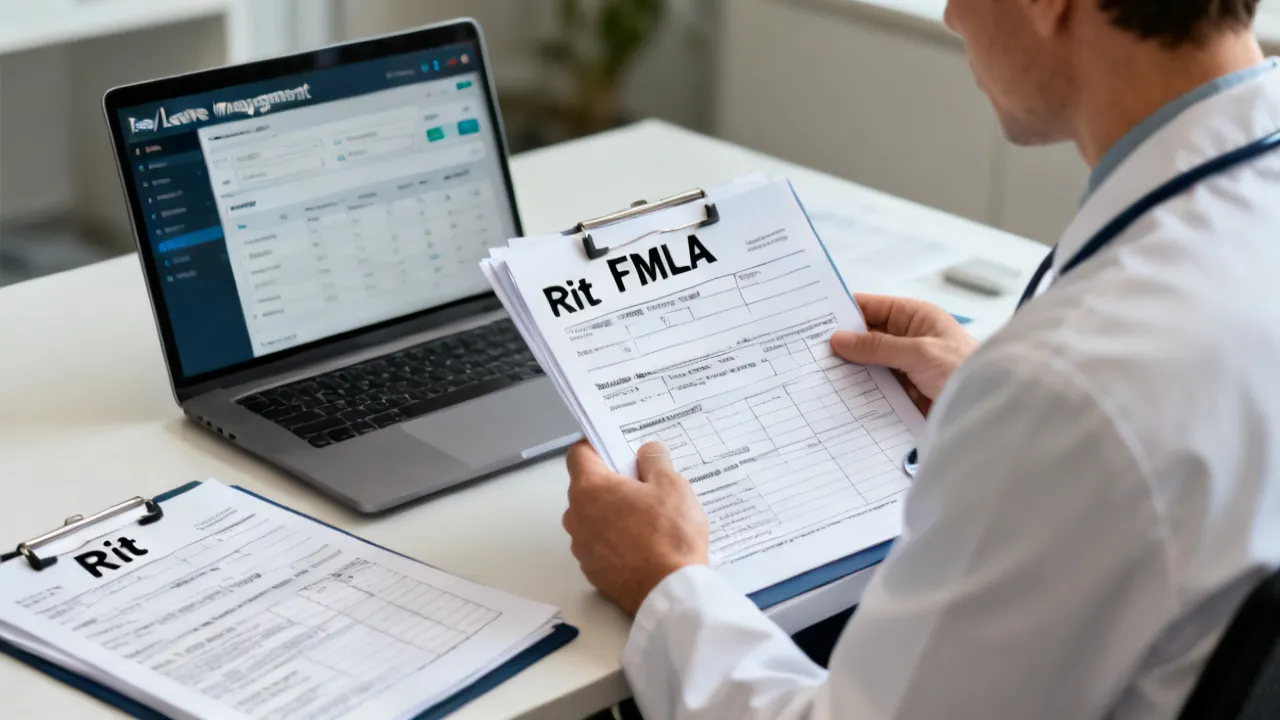
Rit Fmla: what it means for reliable leave requests and compliance
When people search for Rit Fmla, they usually want clarity on how a specific workflow or internal process (“Rit”) aligns with Fmla leave documentation requirements. The very important point for both employees and human-resources teams is that the documentation and eligibility steps must be handled consistently: eligibility, notice, certification, recertification (when allowed), and recordkeeping should follow the same logic every time—so the leave decision is defensible, fair, and auditable.
In practice, “Rit” may refer to a particular organization’s internal portal, HR case-management steps, or institutional shorthand for how leave packets are processed. Because systems and naming conventions vary, the only safe approach is to map the internal workflow onto the core Fmla framework: who is eligible, what qualifies as an FMLA-covered reason, what paperwork is required, and what timelines apply.
Many disputes that appear to be about “the law” are actually about process: missing forms, unclear submission deadlines, inconsistent manager guidance, or incomplete follow-up. When employees or managers don’t know what the internal system expects—what to submit, where to submit it, and when—they often produce documentation that is technically “close” but not sufficient to trigger a correct FMLA determination. A well-structured “Rit” workflow is therefore less about bureaucracy and more about ensuring that the organization’s administration of FMLA remains consistent, complete, and verifiable.
For that reason, this article treats Rit Fmla as shorthand for “our internal workflow for FMLA leave requests”—not as a separate legal concept. In other words, the law does not change because a portal exists. The portal and internal steps only help ensure that the organization performs the required actions correctly every time.
Core background: FMLA principles behind the “Fmla” keyword
The Family and Medical Leave Act (FMLA) is a U.S. federal law that provides eligible employees up to 12 workweeks of unpaid, job-protected leave during a 12-month period for specified family and medical reasons. The statute and implementing regulations emphasize: (1) eligibility criteria for the employee and covered employer, (2) required notice by the employee, (3) employer’s right to request medical certification for qualifying health conditions, and (4) strict recordkeeping and posting duties for covered entities.
Because the legal framework is standardized, the “Rit” component (whatever it represents in your organization’s context) should be treated as a process layer that supports compliance with the FMLA layer—not a replacement for it. In other words: the internal system should not change what qualifies, but it can streamline how requests are submitted, reviewed, tracked, and documented.
For authoritative guidance, employers and HR professionals typically rely on the U.S. Department of Labor’s Wage and Hour Division materials, including FMLA fact sheets and regulations. Source: U.S. Department of Labor, Wage and Hour Division (FMLA guidance and regulations).
To understand how “Rit Fmla” should work, it helps to understand what employers must do and what employees must do under FMLA. Employers need to determine eligibility (whether the employee meets criteria such as tenure/hours requirements), inform the employee of rights and responsibilities, and if the reason may qualify under FMLA, determine whether leave can be designated as FMLA-protected. Employees, in turn, must provide notice and follow reasonable procedures for requesting leave. If medical certification is requested, employees must provide it within the employer’s time frames. These actions are interdependent: if one side fails to meet process expectations, the FMLA designation might be delayed, denied, or partially granted.
So when someone searches Rit Fmla, the likely underlying question is: “How do I make sure my organization handles these steps correctly using our internal workflow?”
Why “Rit Fmla” searches spike: common operational pain points
In many organizations, the phrase Rit Fmla emerges when employees or managers face real-world uncertainty—especially around paperwork and timelines. Common triggers include:
- Confusion about notice: whether the employee must provide advance notice for foreseeable leave, and what “as soon as practicable” means in day-to-day communication.
- Medical certification expectations: how to submit a certification form, what details providers must complete, and what to do if information is incomplete.
- Intermittent leave management: how scheduled appointments or episodic needs are tracked without creating gaps in coverage.
- Recertification and extensions: how to handle changes in condition or continued needs when the initial period ends.
- Return-to-work clarity: what employers may require (and what they cannot require) when an employee returns.
- Uncertainty about internal portals: where employees must upload forms, how to name documents, and how to confirm submissions were received.
- Discrepancies between HR and manager expectations: for example, one manager telling an employee to email something while the “Rit” system requires upload through a portal.
- Timing mismatches: employees submit forms quickly but the employer does not complete eligibility and designation steps promptly, creating confusion about whether leave is “protected.”
An expert perspective is that very disputes do not originate in the law itself; they arise from inconsistent process execution. That is why mapping “Rit” workflows onto FMLA steps is the practical solution: it reduces ambiguity, improves documentation quality, and limits avoidable risk.
Another reason searches spike is that employees often learn about FMLA only when a particular event happens—an illness diagnosis, a planned surgery, a caregiver need, or a family-related medical circumstance. At that moment, the employee may be under stress and unable to navigate complex administrative steps without guidance. If the organization’s internal process isn’t intuitive, the employee might not know which form corresponds to which reason category, which can delay the FMLA determination.
When that delay occurs, employees may feel treated unfairly (for example, that they are being disciplined for absences that the employee believed would be protected). HR teams then may be forced to “catch up” and retroactively designate leave, which is sometimes allowed but can lead to disputes when documentation is incomplete or late.
Industry expert view: a defensible FMLA workflow aligned to “Rit” systems
In HR operations, a sound approach is to treat leave administration as a controlled process with checkpoints. From an expert compliance standpoint, your organization should structure the workflow so that each step produces a clear record. If “Rit” is your internal platform, the platform should be configured to:
- Capture the initial request with date stamps, the employee’s requested leave type (intermittent or continuous), and the qualifying reason category.
- Trigger eligibility checks early, using documented rules for covered employer status and employee tenure/hours thresholds (as applicable under FMLA).
- Standardize notice obligations by prompting employees (or managers) for the information FMLA rules require.
- Enforce certification intake rules with review logic for completeness, and clear next steps for missing or unclear information.
- Track timelines for employer determinations, follow-ups, and certification review outcomes.
- Document decisions consistently: approvals, denials, requests for additional information, and the rationale tied to FMLA criteria.
- Maintain recordkeeping so leave history can be produced if audited or reviewed.
This workflow is not about being overly bureaucratic; it’s about reducing interpretive drift across teams. In operational terms, “Rit Fmla” often signals that someone wants that drift removed.
To illustrate what “interpretive drift” looks like, consider the following examples:
- In one department, managers might ask for “medical notes” informally via email. In another department, managers might tell employees to use the portal. If HR later tries to designate leave, inconsistent documentation paths make it harder to determine whether the certification was complete and submitted on time.
- Some managers might tell employees that any doctor’s note qualifies automatically. But FMLA designation depends on a proper certification form or equivalent content as permitted by rules. Without correct certification, HR may be unable to designate leave as FMLA-protected.
- Different teams may apply different interpretations of what counts as notice. For example, one manager might accept a voicemail as “notice,” while another requires portal submission. The internal workflow should define what HR considers adequate notice to ensure fair treatment.
A well-designed “Rit” system reduces these issues by making the path consistent: submission method, fields required, deadlines, HR review checkpoints, and the final designation outcome should be the same across departments.
Conditions and requirements: what typically governs FMLA documentation decisions
Below are practical conditions that HR teams should apply when managing Fmla-type leave requests. Note that the exact application depends on organizational coverage and employee facts, so teams should consult legal counsel or official guidance where needed.
- Eligibility must be assessed: FMLA is not automatic; the employer must determine eligibility based on the applicable statutory criteria.
- Notice must be reasonable and timely: foreseeable events generally require advance notice; unforeseeable events require notice “as soon as practicable.”
- Certification may be required: employers can request appropriate medical certification for qualifying conditions, following the rules for completeness and clarity.
- Coverage must match reason categories: leave must align with FMLA-covered reasons (as defined by the law and regulations).
- Intermittent leave must be tracked: intermittent leave use should be managed in a way that preserves job protection while respecting operational continuity.
- Recertification has limits: employers should recertify only in permitted circumstances and within the regulated timing framework.
- Recordkeeping matters: employers generally must retain records showing FMLA leave usage and related determinations.
Source: U.S. Department of Labor, Wage and Hour Division—FMLA guidance and regulations.
To make these requirements operational within “Rit,” HR should define how each requirement translates into system fields, workflow states, and documentation artifacts. For example:
- Eligibility must be assessed → “Rit” should store the eligibility result, with the basis (e.g., tenure and hours calculations) and date of determination.
- Notice must be reasonable and timely → “Rit” should record the date/time employee gave notice (or the system upload timestamp) and note whether the event was foreseeable.
- Certification may be required → “Rit” should request the appropriate certification document based on reason category, capture submission status, and log whether follow-ups were needed for incomplete information.
- Coverage must match reason categories → “Rit” should allow HR to categorize the reason as one of the permitted FMLA categories and support designation decisions tied to that category.
- Intermittent leave must be tracked → “Rit” should allow employees to report intermittent absences and should tie each occurrence to the underlying approved FMLA designation.
- Recertification has limits → “Rit” should schedule the earliest allowed recertification date and enforce rules about when recertification is permissible.
- Recordkeeping matters → “Rit” should maintain an audit trail and retention policy for documents and key case notes.
When those operational translations are done thoughtfully, “Rit Fmla” becomes a reliable, repeatable system rather than an ad-hoc set of decisions made by whichever HR person happens to handle the case.
Comparison table: “Rit Fmla” process layers vs. the underlying legal FMLA layer
| Aspect | “Rit” (internal workflow layer) | “Fmla” (legal compliance layer) |
|---|---|---|
| Purpose | Organize submissions, route cases, track status | Define eligibility, covered reasons, and employer duties |
| What can vary | Portal steps, naming conventions, internal forms (within limits) | What qualifies and timelines defined by statute/regulations |
| Documentation focus | Ensure correct intake and completeness checks | Require appropriate certification when allowed; verify eligibility |
| Decision defensibility | Produces audit-ready records and consistent outcomes | Decisions must map to statutory criteria |
| Risk reduction | Reduces “lost paperwork” and inconsistent interpretations | Prevents unlawful denial, improper recertification, or poor recordkeeping |
One of the most useful ways to interpret the table is to recognize that it is the “FMLA layer” that determines legality, while the “Rit layer” determines how easily legality can be proven. If legality can’t be proven because records are missing or inconsistent, the organization’s compliance posture weakens—even if the organization’s intended outcome was correct.
Step-by-step guide: aligning a “Rit” workflow with FMLA actions
Use this as a practical checklist for HR and managers handling Rit Fmla inquiries. Adjust to your organization’s policies, but keep the underlying compliance logic consistent.
- Receive and log the request: record the submission date, the employee’s stated reason category, and whether leave is continuous or intermittent.
- Confirm coverage and eligibility: evaluate whether the employer is covered and whether the employee meets eligibility requirements under FMLA.
- Provide required notices: ensure the employee receives the appropriate notice related to FMLA rights/obligations and expected steps (as applicable under your compliance program).
- Request certification when appropriate: use the employer’s allowable process for medical certification. Ensure the employee knows how and where to submit.
- Review certification for completeness: if information is missing or unclear in ways permitted by the rules, follow the employer’s structured follow-up procedure.
- Determine approval/denial: issue a decision with a documented rationale tied to FMLA criteria.
- Track intermittent usage: for episodic leave, document each usage pattern and coordinate scheduling impacts while preserving job protection.
- Handle recertification cautiously: only request updates when allowed and within permitted timing conditions.
- Manage return-to-work: confirm job restoration responsibilities consistent with the law; apply only permissible fitness-for-duty approaches.
- Maintain records: ensure records of requests, determinations, and leave usage are retained according to policy and applicable requirements.
To make this checklist more practical, HR teams should also define “who does what” at each step:
- Manager responsibilities typically involve receiving notice, ensuring the employee’s request is routed through proper channels, and maintaining work coverage while leave is being evaluated.
- HR responsibilities typically involve eligibility determinations, communications of rights/responsibilities, medical certification management, designation decisions, and recordkeeping.
- Employee responsibilities typically involve providing notice, submitting complete certification, and communicating scheduling needs for intermittent leave.
When those responsibilities are clear in “Rit,” employees experience fewer conflicting instructions, and HR can demonstrate procedural consistency.
What employees typically need to understand when dealing with “Rit Fmla” requests
If you’re an employee navigating Rit Fmla processes, the key is to treat documentation as a communication tool. Provide accurate information, submit certifications promptly, and keep a record of what you submitted and when. In practical terms:
- Ask what the organization needs specifically (e.g., certification type and deadline expectations).
- Use the designated submission method so the “Rit” workflow can timestamp and route your request.
- When leave is intermittent, coordinate with your manager on scheduling expectations while understanding that intermittent patterns may be medically necessary.
- If you receive a request for additional information, respond promptly so the employer can make a timely determination.
An expert note: delays often occur not because the employee lacks eligibility, but because submissions are incomplete. A well-designed internal workflow reduces these delays by prompting employees for the missing elements early.
Employees can further reduce problems by understanding how “completeness” is evaluated. For example, many medical certification workflows require specific provider statements—such as the nature of the condition (as appropriate), an estimate of duration, and whether leave is continuous or intermittent. Even if a provider writes a note, it may not include the specific information the employer requires. Therefore, an employee should ensure the provider completes the employer’s certification form rather than simply providing a generic note—unless the employer has told the employee that a different form of certification is acceptable.
Another important employee perspective is the difference between:
- Asking for time off (a request for leave)
- Having leave designated as FMLA-protected (a legal designation based on eligibility and covered reason)
Employees sometimes assume that because they requested leave, it is automatically protected under FMLA. In practice, FMLA designation can depend on certification and employer procedures. That is why the “Rit” workflow must clearly show status stages (for example: “Received,” “Eligibility pending,” “Certification requested,” “Designation pending,” “Designated,” “Not designated”). When employees see the steps in the portal or receive timely updates, they are less likely to become frustrated or to misinterpret the organization’s actions.
Finally, employees should be mindful of confidentiality. Medical information should only be shared with authorized HR personnel and any required personnel in accordance with policy. The “Rit” workflow should be designed to protect confidentiality, such as access controls in the portal and limited sharing of medical details with managers.
For employers: common compliance pitfalls linked to “Fmla” administration
From a compliance lens, “Rit Fmla” issues are frequently tied to operational mistakes. Avoid these pitfalls:
- Inconsistent determinations across managers: different supervisors may interpret certification or notice requirements differently.
- Documentation gaps: missing timestamps, absent records of follow-ups, or unclear decision rationales.
- Improper handling of medical information: medical documentation should be treated as confidential and accessed only by authorized personnel.
- Overreaching return-to-work conditions: fitness-for-duty approaches must comply with the limitations under FMLA.
- Failure to manage intermittent leave properly: intermittent leave should not be treated like an unstructured excuse; it requires tracking and clear communications.
- Incorrect notice handling: accepting notice through unapproved channels can lead to disputes about whether timely notice was given under organizational policy.
- Delays in HR action: if HR waits too long to respond or to request certification, employees may claim harm from uncertainty.
- Retroactive designation without documentation: while retroactive designation can sometimes happen, it still requires a defensible record that the leave met criteria.
- Failure to manage “hours” correctly for intermittent use: miscalculating leave usage can create issues with job protection and remaining leave balances.
Source: U.S. Department of Labor, Wage and Hour Division—FMLA fact sheets and compliance guidance.
To help employers avoid these pitfalls, “Rit” should be designed with guardrails. Examples of guardrails include:
- Mandatory fields: HR staff should be unable to close a case without documenting eligibility outcome, designation outcome, key dates, and any follow-up steps taken.
- Workflow timers: the portal can alert HR if certification review or additional information requests are overdue relative to internal time frames aligned with FMLA rules.
- Audit trails: the system should log who accessed the case, what documents were uploaded, and what decision was made.
- Controlled language templates: notices to employees should be standardized to ensure employees consistently receive required FMLA communications.
- Confidentiality controls: access limitations should ensure managers see only what they need to manage work coverage.
Employers also should ensure that their policies and portal workflows are synchronized. If the portal requires uploads through a specific route, but company policy says employees may email documents, inconsistencies can confuse employees. Best practice is to keep policy and “Rit” instructions aligned so employees receive one coherent set of expectations.
FAQ: Rit Fmla and FMLA documentation questions
1) What does “Rit Fmla” usually refer to?
“Rit Fmla” is commonly used as a shorthand for how an internal process (often “Rit”) handles leave requests in the context of FMLA obligations (“Fmla”). Because “Rit” naming varies by organization, you should confirm what your workplace means by “Rit” (e.g., a portal, workflow, or case-management step).
2) Is FMLA paid leave?
FMLA leave is generally unpaid, though employers may allow employees to use accrued paid leave concurrently, depending on the situation and employer policy. For exact treatment, refer to the applicable Department of Labor guidance and your employer’s policies.
In practice, this creates another “Rit” workflow requirement: the portal may need to track both FMLA designation and whether paid leave is used concurrently (such as PTO, sick leave, or vacation). If “Rit” tracks these separately but without linking them to designation dates, employees can become confused about their paycheck deductions and leave balances.
3) How quickly must an employee provide notice for FMLA?
If the need for leave is foreseeable, advance notice is generally required. If the need is not foreseeable, notice should be provided as soon as practicable under the circumstances. The precise expectations can vary based on facts, but timelines should be documented.
Under a “Rit” workflow, notice requirements should translate into system steps: for example, the employee might select whether the event was foreseeable and the expected date of leave. Then the system can prompt for required details and create a record of notice date/time. This is often critical in disputes where the employer argues that the notice was not timely.
4) What if the medical certification is incomplete?
Employers typically may request additional information to correct incompleteness or clarify certain aspects, following the rules for what is permitted. The top practice is to use a standardized internal follow-up workflow so the request is consistent and auditable.
For completeness checks, “Rit” should define what HR considers “complete enough” to make a designation decision and when follow-up is required. It also should include version control: HR should not accept outdated forms or partially completed certifications without making clear what is missing. The system should track follow-up correspondence dates.
5) Can employers deny FMLA if documentation is late?
Late documentation can affect the timing and determination of FMLA coverage, but decisions should be consistent with the statutory and regulatory framework. If you’re an employee, submit documents promptly and ask what deadlines apply. If you’re an employer, document your decision process and reference official guidance.
A key nuance is that even if certification is late, employers should still evaluate whether the leave may ultimately qualify once documentation is provided. “Rit” workflows should include a state for “certification received after deadline” so HR can document how designation was handled and whether any retroactive designation was made.
6) Does “Rit” change the legal requirement?
No. Any internal system or workflow should support compliance; it should not alter the legal requirements tied to “Fmla.” The workflow’s job is to ensure that the statutory duties are performed correctly.
This is sometimes misunderstood when employees see “Rit” as a separate rule engine. “Rit” is a tool to operationalize FMLA duties. If a portal promises job protection, it should only be promising what FMLA law actually provides and only after required steps are completed.
7) Where can I find reliable FMLA guidance?
The U.S. Department of Labor (Wage and Hour Division) provides official FMLA fact sheets, regulations, and compliance resources. Using those materials is the very reliable approach when you need to interpret eligibility, notice, certification, and recordkeeping requirements.
For employers, it can also be useful to align internal training and portal wording directly with DOL guidance to prevent outdated practices from remaining in the workflow.
Conditions and requirements checklist (quick review before you submit or decide)
- Confirm whether your organization is a covered employer and whether the employee meets eligibility requirements.
- Ensure notice steps are followed and documented (especially for foreseeable events).
- Submit certification using the designated process in your “Rit” workflow.
- Verify completeness and respond quickly to clarification requests.
- Track intermittent leave usage and keep records consistent with policy and guidance.
- Apply return-to-work and confidentiality requirements carefully, using authoritative guidance.
Source: U.S. Department of Labor, Wage and Hour Division—FMLA materials.
What a “good” “Rit” portal workflow looks like in practice
Because “Rit” can mean different things across organizations, it’s helpful to describe characteristics of a good workflow rather than assuming a single design. In a best-case setup, an employee experiences a consistent series of prompts and confirmations, and HR experiences a workflow that is difficult to get wrong.
1) Clear case statuses and transparency for employees
A well-designed portal should display status updates (or at least send emails) after each key event. For example:
- Case created / request received
- Eligibility check initiated / eligibility result communicated
- FMLA rights & responsibilities notice issued
- Certification requested
- Certification received (and completeness review started)
- Additional information requested (if needed)
- FMLA designation decision issued
- Intermittent leave schedule tracking enabled (if applicable)
- Recertification due (only when permitted)
- Return-to-work process steps issued (with proper constraints)
This reduces employee uncertainty and also reduces manager confusion because everyone is working off the same state of the case.
2) Built-in completeness review for certifications
Certification forms often require specific provider statements. A good workflow includes:
- Checks that the employer’s required certification type is selected correctly based on reason category.
- Validation that the form appears to be the correct version and that essential fields are present (at least to HR’s standards).
- Guidance for HR on what follow-ups are permissible if incomplete.
- Document storage that prevents the loss of files and supports audit trails.
While automation can help, it must be careful not to replace professional review. The portal can flag likely issues, but an HR staff member should still review and document the completeness decision.
3) Timeline management aligned with policy
FMLA does not operate without time. Employees and employers have obligations about “when” notices and certifications must be provided. A reliable “Rit” workflow provides reminders and deadlines, such as:
- When certification is requested, a deadline for submission is communicated.
- If information is incomplete, follow-up requests and deadlines are tracked.
- Designation decisions are scheduled for prompt completion (so employees are not left in limbo).
- Recertification requests are scheduled only when permitted.
If the portal does not track timelines, HR may miss required follow-ups, leading to delays that can create employee complaints and compliance risk.
4) Intermittent leave tracking that connects each absence to the designation
Intermittent leave is where many “Rit Fmla” problems appear because it requires ongoing tracking and careful scheduling coordination. A good workflow supports:
- Recording each occurrence of leave (date and, when relevant, expected duration in hours).
- Linking each occurrence to the underlying FMLA designation and reason category.
- Allowing HR to communicate rules for reporting future absences while preserving job protection.
- Providing managers with enough information to manage schedules without exposing unnecessary medical details.
To further reduce disputes, a portal can standardize how employees communicate intermittent absences. For example, it can require reporting through a timekeeping integration or a “leave occurrence” reporting step.
5) Confidentiality by design
FMLA medical information should be treated as confidential. A “Rit” workflow should include:
- Role-based access controls (HR has full access; managers see only necessary information).
- Secure storage and restricted download/printing of sensitive documents.
- Audit logs for access and edits.
Confidentiality controls are not just “nice to have”—they are part of responsible administration. Inconsistent access controls can lead to inadvertent disclosure and add risk beyond FMLA compliance.
6) Audit-ready outputs
If compliance is ever questioned, an organization must be able to produce records: the request, notice, certification, determination, follow-ups, and leave usage. A good workflow ensures that those records exist in one place with timestamps and decision logic documented.
In practical terms, HR teams should be able to export a case file that includes:
- Employee request details
- Eligibility determination and basis
- Notices sent to the employee
- Certification request and receipt
- Completeness decision and follow-up correspondence (if any)
- Designation decision and effective dates
- Intermittent leave occurrences (as applicable)
- Recertification events (if applicable)
- Return-to-work steps and any fitness-for-duty determination (when permitted)
Mapping employee scenarios to “Rit Fmla” workflow states
To make the process more concrete, consider several common scenarios and how a well-aligned “Rit” workflow would handle them. These examples also show why mapping the internal process to FMLA logic matters.
Scenario A: Foreseeable surgery with continuous leave
An employee schedules surgery for next month. They notify their manager today and upload their certification through “Rit” using the employer’s process. The workflow should:
- Log the notice date as “foreseeable.”
- Trigger eligibility check immediately.
- Send required rights/responsibilities notice.
- Request certification appropriate to the reason category.
- Upon receiving certification, perform completeness review.
- Designate leave as FMLA-protected for the relevant period (and account for any concurrent paid leave per policy).
- Store the decision and effective dates.
If the portal misroutes certification (for example, it gets emailed to the wrong inbox), HR might not see it in time, causing delay. That can lead to confusion about whether the absences will be protected. A well-aligned “Rit” workflow avoids that by ensuring correct intake and routing.
Scenario B: Sudden illness with unforeseeable leave
A caregiver or employee is suddenly hospitalized and begins missing work immediately. The employee notifies their manager the same day and submits certification as soon as possible. The workflow should:
- Record notice as “unforeseeable” and log the timestamp of communication.
- Prompt HR to check eligibility quickly.
- Send rights/responsibilities notice and request certification.
- Allow for a realistic certification submission deadline based on the circumstances (within the employer’s policy and FMLA rules).
- Track the case status while the certification is pending.
In these cases, “Rit Fmla” matters because the portal helps HR manage the uncertainty responsibly. HR can communicate with the employee about what is pending and what is expected, rather than leaving the employee to guess.
Scenario C: Intermittent leave for recurring medical appointments
An employee needs to take leave multiple times per month. The workflow should:
- Designate intermittent leave with clear approved parameters (as provided by certification).
- Set up rules for reporting each absence (how, when, and what details are required).
- Track each occurrence and ensure it counts against the employee’s FMLA leave usage.
- Provide managers with scheduling impact guidance without exposing medical details.
- Track recertification schedule if needed.
Intermittent leave often creates the most friction because it can look like “random” absences from a scheduling perspective. The “Rit” workflow makes those absences structured and defensible by linking them to the FMLA designation.
Scenario D: Incomplete certification and follow-up
A provider returns a certification form missing critical details. The workflow should:
- Mark certification as incomplete.
- Generate a standardized follow-up request.
- Record the follow-up request date and deadline for employee response.
- Upon receipt of clarified information, re-run completeness review.
- Proceed with designation once the required information is present.
This scenario is where “Rit” can reduce error dramatically. Without a standardized follow-up path, HR might ask different questions each time, or might not document what was missing. That can create compliance risk and employee frustration.
Scenario E: Return-to-work and fitness-for-duty limits
If the employer requires fitness-for-duty, the workflow should ensure:
- Any fitness-for-duty requirement is applied consistently and permitted under FMLA rules.
- The employer communicates requirements clearly in a standardized notice.
- Medical information handling remains confidential.
- Job restoration decisions align with FMLA protections and available medical documentation.
A portal that includes templates and decision checklists helps HR avoid overreaching return-to-work requirements that exceed what FMLA allows.
How to evaluate whether your internal “Rit Fmla” process is working
Organizations can assess the quality of their “Rit Fmla” workflow by examining outcomes and operational metrics. While exact metrics vary by organization size and policy, common indicators include:
- Time-to-designation: how long cases remain in “pending” status after initial request.
- Certification completeness rates: the percentage of certifications returned as incomplete on first submission.
- Follow-up consistency: whether follow-up requests use standardized language and documented steps.
- Intermittent leave reporting accuracy: whether occurrences are accurately recorded and properly counted.
- Audit readiness: how easily HR can export complete case files.
- Employee satisfaction: feedback from employees about clarity of instructions and timelines.
- Manager clarity: whether managers understand what they should and should not ask for and where to route requests.
When these metrics are poor, the problem often isn’t the law—it’s the “Rit” process implementation. For example, if time-to-designation is slow, HR may not be triaging cases effectively. If certification completeness is low, the portal may need better instructions for employees and providers.
A helpful practice is to run periodic “case file” reviews. HR can randomly select a set of cases and verify that:
- Eligibility determination was documented.
- Required notices were sent.
- Certification requests matched the reason category.
- Completeness follow-ups (if needed) were consistent and documented.
- Designation decisions referenced appropriate criteria.
- Leave usage was tracked accurately.
- Confidentiality protections were followed.
This kind of review supports the defensibility of decisions and can reveal gaps before a formal complaint or audit.
Common “Rit Fmla” misunderstandings and how to correct them
Misunderstandings create friction between employees and HR. The following are frequent issues that can arise when “Rit Fmla” is not properly explained.
Misunderstanding 1: “If I submit to the portal, FMLA is automatically approved.”
Submitting a request and uploading documents through “Rit” is necessary for the process, but approval/designation still depends on eligibility and covered reasons. The portal should therefore clarify status: “Request received,” “Certification pending,” “Designation pending,” etc.
Misunderstanding 2: “Any doctor note qualifies as FMLA certification.”
Employers generally require appropriate medical certification content. A portal can help by providing certification forms and provider instructions, and by explaining that generic notes may not include required information.
Misunderstanding 3: “Managers can request whatever they want medically.”
Managers may need to know scheduling impacts, but medical details should remain confidential. “Rit” can help by separating what managers see versus what HR reviews.
Misunderstanding 4: “Intermittent leave is treated like sporadic sick time.”
Intermittent FMLA leave is structured. It must be tracked and counted against the employee’s leave entitlement. “Rit” should integrate with timekeeping or require structured occurrence reporting.
Misunderstanding 5: “Recertification can be requested anytime.”
Recertification has limits. A “Rit” system can enforce this by allowing recertification requests only in the permitted windows and by capturing justification and dates.
Designing policy language and portal instructions to support compliance
Many “Rit Fmla” issues persist because policies and portal instructions are not aligned. Employers should review both documents and portal workflows together. Key components include:
- Submission instructions: how employees submit requests, certifications, and additional information.
- Deadlines: clear deadlines for certification submission and responses to requests for clarification.
- What employees should provide: specific forms, complete provider instructions, and how to handle extensions or changes.
- Manager role boundaries: what managers can say, what they can request, and when they must route questions to HR.
- Confidentiality: clear statement of who can access medical records.
- Intermittent leave reporting: reporting process and how occurrences are tracked.
- Return-to-work process: any permissible fitness-for-duty approach and how it will be handled.
In a strong “Rit” ecosystem, the employee-facing portal copy should mirror policy language closely. If policy says “upload via portal,” and portal says “email to HR,” employees will become confused, and HR will face inconsistent intake methods.
Recordkeeping and audit readiness: why the “Rit” layer matters
FMLA recordkeeping is a legal requirement. But recordkeeping is also operational. Even if a company’s HR team intends to follow the law, records can be incomplete if systems are weak. “Rit Fmla” emphasizes that recordkeeping must be consistent and defensible.
Audit readiness usually hinges on three things:
- Completeness of case files: are the key documents present (request, eligibility determination, notices, certification, follow-ups, designation decision, leave usage records)?
- Consistency: do cases follow the same process logic, or do they vary unpredictably by HR staff or manager?
- Timeliness and timestamps: can the organization show when decisions and requests were made?
“Rit” systems often excel at timestamps because portals automatically record submission times. HR can then demonstrate whether the organization met its own process steps and whether the employee provided required notice/certification within policy time frames.
Additionally, the audit trail can help resolve disputes. If an employee believes they submitted certification on time but HR never received it, the portal’s records become crucial. If the portal shows successful upload timestamps and HR’s review status, it can quickly resolve misunderstandings.
Intermittent leave: deeper operational considerations for “Rit” workflows
Because intermittent leave is frequently where “Rit Fmla” questions arise, it is worth expanding how an organization should operationalize intermittent leave management. Intermittent leave is medically necessary time away in separate blocks or by reducing work schedule. The workflow must preserve job protection while respecting operational needs.
Scheduling impacts and communication
The organization needs a consistent approach to how managers schedule work, communicate expectations, and handle last-minute absences. A good workflow defines:
- What constitutes adequate notice for an intermittent absence (for example, how much notice is required when possible).
- How employees should report an occurrence when the need is sudden.
- Whether employees must provide documentation for each occurrence (generally not every absence requires a new certification, but rules can vary).
- How manager communications should avoid requesting prohibited medical details.
“Rit” can implement standardized templates for manager notifications that focus on operational needs (e.g., “submit occurrence through the system by end of day”) without requesting medical specifics.
Counting leave usage accurately
Intermittent leave often involves tracking leave in hours. If the portal/timekeeping integration is poor, the organization may incorrectly charge leave, affecting job protection and the remaining FMLA balance.
Therefore, “Rit” should define:
- How FMLA leave is recorded in hours versus days.
- How partial-day absences are categorized.
- How to correct errors when an occurrence is misrecorded.
Employers should regularly reconcile FMLA usage with timekeeping records to ensure accurate calculations.
Consistency in designation and approvals
Intermittent leave should not be handled differently depending on the manager. The workflow should enforce consistent rules so approvals for intermittent occurrences follow the same logic every time—provided the occurrences remain within the approved medical parameters.
If the organization uses manual spreadsheets, there’s more risk of inconsistency. A portal that routes through HR review can reduce risk.
Recertification and changes in condition: handling evolution without losing compliance
Recertification is an area that can easily become inconsistent. A “Rit” workflow should treat recertification as a controlled process with allowed timing windows and documented justification.
When recertification is permitted
Employers should request recertification only within the circumstances permitted by FMLA rules. The workflow should:
- Record the last certification date.
- Calculate the earliest allowed recertification window.
- Schedule alerts for HR when recertification can be requested.
- Allow employees to submit updated certification through the same secure process.
When there are changes in condition
If an employee’s condition changes significantly, or the expected need for leave becomes different, recertification might be relevant under allowed circumstances. “Rit” should include logic to differentiate:
- Routine time-based recertification (when permitted)
- Requests triggered by changes in condition (when permitted)
- Requests triggered by inconsistencies between the employee’s report and prior certification (again, subject to permitted conditions)
Documenting the trigger for recertification is important for defensibility.
Avoiding overreach
Some organizations mistakenly request recertification too frequently or ask for more information than allowed. “Rit” can prevent overreach by using standardized forms and restricting follow-up prompts to permitted questions.
Return-to-work and job restoration: “Rit” as a guardrail for lawful practices
Return-to-work is another area where process mistakes can create compliance risk. Under FMLA, employees are entitled to job restoration, subject to permitted limitations and exceptions. Employers must apply fitness-for-duty requirements carefully, only when allowed.
Job restoration planning
A consistent “Rit” workflow should support job restoration planning by:
- Linking the leave designation period to the return date.
- Notifying HR when a leave case approaches its end date.
- Ensuring HR and the manager coordinate on available positions consistent with job restoration requirements.
Fitness-for-duty (when permitted)
If the employer requires fitness-for-duty, the workflow should ensure:
- The requirement is applied consistently and within permitted conditions.
- The employee receives clear instructions on what documentation is required.
- Medical information remains confidential.
- HR documents the decision and rationale.
“Rit” can help by using standardized notices and by controlling access to fitness-for-duty documents.
Training managers and employees: aligning behavior with “Rit Fmla” expectations
Even with a strong portal, compliance depends on human behavior. Therefore, “Rit” should be supported by training that clarifies roles and expectations.
Manager training topics
Managers should be trained to:
- Route employee leave requests through the correct workflow channel (e.g., portal submission or HR intake step).
- Avoid asking for medical details beyond what is necessary.
- Communicate scheduling needs and reporting procedures neutrally.
- Document communications and follow internal scripts.
Employee training topics
Employees should be trained to:
- Understand how to submit requests and certifications through the portal.
- Understand what a “complete” certification means and how to work with providers.
- Know deadlines and how to respond to follow-up requests.
- Understand intermittent leave reporting requirements.
- Know what to expect regarding job protection and return-to-work steps.
Training reduces confusion and helps ensure that “Rit Fmla” is understood as an administrative pathway that supports FMLA protections, not as a random bureaucratic process.
Conclusion: treating “Rit Fmla” as process alignment, not legal uncertainty
The practical value of understanding Rit Fmla is that it turns confusion into an actionable checklist. The “Rit” portion should be treated as your internal execution layer—portal, routing, case notes, and workflow checkpoints—while the Fmla portion is the legally defined standard for eligibility, qualifying reasons, notice, certification, and recordkeeping.
When the internal workflow is consistent and documentation is audit-ready, employees experience fewer delays, managers handle fewer unclear cases, and HR reduces compliance risk. That is the core objective of an expert-aligned approach: clarity, fairness, and defensibility.
In short, “Rit Fmla” is not a new kind of leave. It is the operational bridge between employee requests and legally required FMLA administration. When that bridge is well-designed—through standardized steps, confidentiality controls, and audit-ready documentation—the leave process becomes reliable, transparent, and legally defensible for everyone involved.
Note on location keywords: You did not provide any city or country within the keywords, so no location-specific replacements were applied.