
Planning HR with Plansource and BambooHR
This guide explains how Plansource and BambooHR help organizations streamline HR workflows, from hiring and onboarding to leave management and performance planning. Background context covers what HR platforms typically include, why integrations matter, and how vendors differentiate. The discussion remains objective, focusing on operational fit, implementation approach, and practical evaluation criteria.
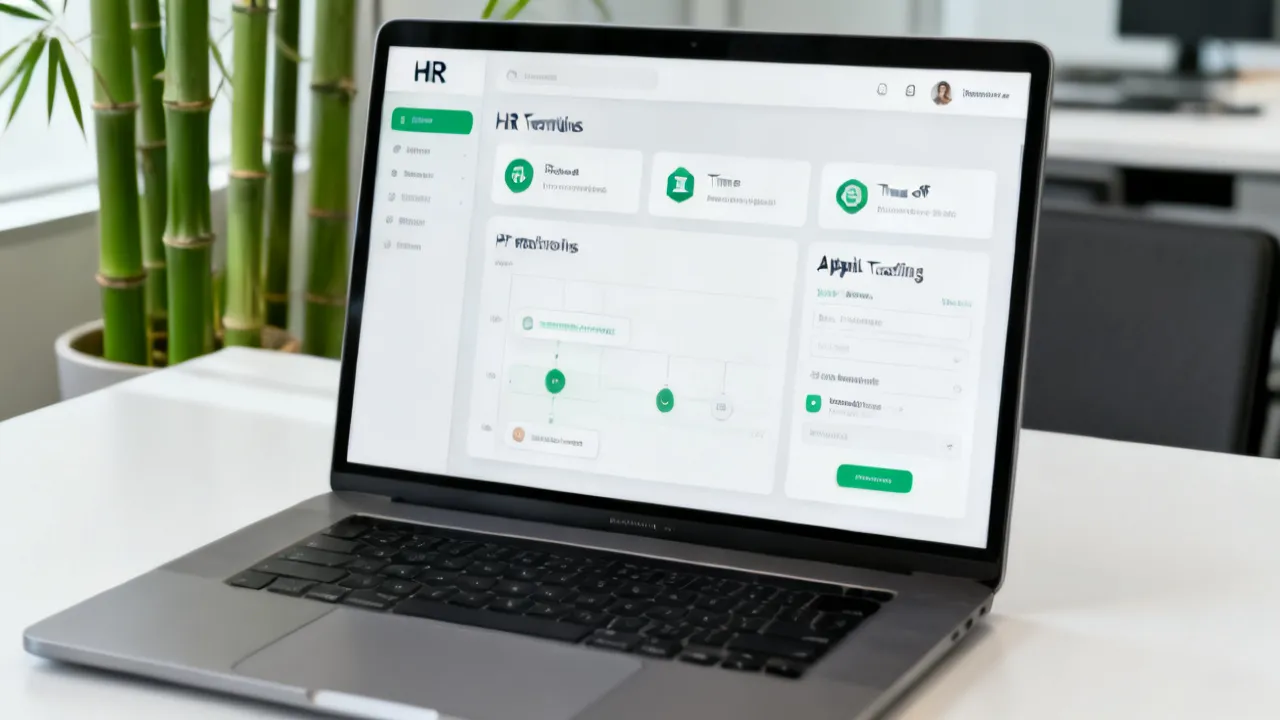
Key decision points when planning HR workflows with Plansource and BambooHR
Choosing an HR platform is often described as a branding exercise—“which system looks best,” “which vendor sounds most innovative,” or “which product has more features.” In reality, the decision is operational. An HR platform succeeds or fails based on whether your hiring, onboarding, time-off, reporting, and performance-support workflows can be standardized without creating new administrative burden. A well-run HR organization does not just want software; it wants a reliable operational engine that turns policies into repeatable steps, preserves an auditable record, and reduces friction for managers, HR administrators, and employees.
Teams evaluating Plansource and BambooHR typically begin by mapping workflow requirements to platform capabilities, confirming data readiness, and testing integrations before broad rollout. The most important work happens before implementation rather than during it: you define what “good” looks like for each workflow stage, establish governance for approvals and edits, and validate whether the vendor can support the workflow end-to-end. In other words, you’re not buying an HR database; you’re building (or redesigning) how HR work moves through people, roles, and systems.
For many organizations, the “critical questions” are straightforward but they have sharp edges in practice:
- Can the platform handle core HR records and employee lifecycle events (new hire, transfers, terminations, role updates, document retention)?
- Does it support hiring and onboarding workflows in a way managers actually use—without bypassing the system?
- How smoothly does it connect to payroll or other HR systems, identity providers, and recruiting tools?
- What governance controls exist to protect data quality across departments, especially around organizational structure and job data?
- Will the workflow model scale as you grow, add departments, or hire faster during seasonal peaks?
When these questions are answered through testing (not just vendor presentations), teams can make a confident decision. When they are answered through assumptions, teams often face expensive rework: half-adopted workflows, duplicated employee records, inconsistent leave approvals, missing onboarding documents, and reporting that doesn’t match operational reality.
What HR platforms typically cover (and where Plansource and BambooHR fit)
Modern HR systems aim to reduce HR sprawl: the scattering of employee information across spreadsheets, email threads, separate tools, and ad-hoc “processes” that only certain HR administrators understand. When HR sprawl exists, it increases cycle time, makes compliance harder, and creates reporting gaps. A platform approach centralizes key data and provides workflows so that HR operations follow consistent paths.
Although exact feature sets vary by vendor, HR platforms generally fall into a few functional categories. In practical terms, you can think of these categories as the “surface area” your HR organization will use daily:
- Employee data management: employee profiles, HR documents, organizational structure fields, contact data, and job information.
- Hiring support: job requisitions, candidate information and pipeline visibility, candidate-to-offer handling, and how hiring outcomes map to employee start dates.
- Onboarding workflows: task assignments, checklists by department or job family, document collection, and training or compliance steps.
- Time-off and leave management: request workflows, approvals, balance logic (when supported), and notifications.
- Reporting and analytics: headcount views, HR operational metrics, trends, and dashboards to reduce spreadsheet dependency.
- Administration and permissions: role-based access, audit trails, and governance controls that protect sensitive data.
In most deployments, these categories are not independent. They interact. For example:
- Onboarding task templates depend on employee job data (department, location, role type).
- Time-off approvals depend on manager hierarchy and role permissions.
- Reporting depends on data quality in job and organizational fields, which depends on governance.
- Hiring outcomes depend on consistent mapping between candidate statuses and eventual employee records.
Where Plansource and BambooHR often differ in emphasis is in the workflow center of gravity. Organizations considering Plansource frequently look for strong recruiting and HR workflow support, especially if their hiring-to-onboarding process needs orchestration and structured talent acquisition operations. Organizations considering BambooHR frequently emphasize how well the platform standardizes day-to-day HR activities—employee records, onboarding, time-off—while enabling HR administrators and managers to collaborate with less manual coordination.
To evaluate “fit,” it helps to ask: which workflow stage is your current operational pain? If recruiting coordination and hiring handoff are where you lose time and cause confusion, you’ll likely weight hiring-related capabilities heavily. If your HR team’s burden is operational maintenance—updating employee records, tracking onboarding steps, managing leave requests—then your evaluation will heavily weight HR administration workflows and usability for non-HR stakeholders.
Integrations and implementation: the practical divider between “promising” and “successful”
The difference between an HR tool that looks compelling in a demo and one that delivers operational value is often implementation quality. HR platforms are not just “systems of record.” They are workflow engines. If your team misinterprets the data model, underestimates data migration effort, or fails to map workflows to how the system works, adoption can stall—even if the software is technically capable.
Industry practitioners often frame HR platforms as a set of interlocking layers:
- The data layer (employee records, job data, documents).
- The workflow layer (approvals, task routing, checklists).
- The integration layer (identity, payroll, benefits, recruiting systems).
- The governance layer (permissions, change tracking, audit expectations).
In an expert evaluation, you want to verify each layer, not only the workflow surface. Teams commonly validate:
- Integration readiness: Does the platform integrate with your identity provider (SSO), payroll system, benefits administration, and existing ATS or recruiting tools? Are the integrations native, configurable, or dependent on custom middleware?
- Data migration approach: Are you migrating only essential employee fields at launch, or trying to migrate full historical data immediately? How will you handle inconsistent legacy values?
- Workflow governance: Who owns approval paths, role assignments, template definitions, and changes to workflows over time?
- Change management: Do managers receive guidance and a clear explanation of what changes for them, how to use the system, and what is expected during the first weeks?
- Measurement plan: Are you tracking adoption and cycle-time improvements after rollout, rather than declaring the project “done” once configuration is complete?
Even reliable HR tools can underperform if workflows are not aligned with how your organization currently operates—or more importantly, how you want it to operate. A common failure mode involves approvals and “shadow workflows.” For instance, if your leave approval process still relies on informal messaging (email/Slack) outside the platform, managers may continue that behavior. The platform will then contain incomplete operational records, and HR reporting may show delays or missing approvals. This results in a mismatch between what happened operationally and what the system “believes” happened.
Therefore, integration and implementation evaluation must include process discipline. The platform should become the source of truth for defined events—like time-off requests—so that operational records match reporting outputs and audits.
Operational evaluation lens: hiring, onboarding, and ongoing HR administration
Instead of evaluating platforms feature-by-feature in isolation, expert teams use a workflow lens. A productive way to compare Plansource and BambooHR is to walk through end-to-end HR moments: the events that employees and managers experience and the handoffs that HR teams must coordinate.
Below is a practical operational lens you can use during vendor demos and internal testing. The goal is not to collect marketing answers; it’s to measure whether the platform supports consistent routing, accurate record updates, and manageable workflows for the humans using them.
1) Hiring workflow visibility and handoff to onboarding
Organizations typically want clarity at two points: (a) where candidates are in the hiring process, and (b) how hiring decisions translate into onboarding tasks. If the platform supports structured recruiting pipelines and also connects those outcomes to onboarding checklists, HR can reduce rework and avoid missing steps.
When comparing vendors, ask how candidate status and the new employee start date propagate into onboarding tasks. For example:
- When an offer is accepted, does the system automatically create onboarding tasks?
- Does the system know the department, location, and job family so tasks are assigned correctly?
- If the candidate’s start date changes, what happens to the onboarding schedule?
- Can HR see whether onboarding tasks are created and completed for every hire, even across multiple departments?
In some organizations, hiring and onboarding are coordinated manually. A platform might still improve the process, but the magnitude depends on whether the handoff is automated. If the handoff requires manual intervention each time, HR may offset workflow automation gains with extra steps, which can reduce adoption and increase error rates.
During evaluation, don’t be satisfied with “yes, we can do that.” Ask for workflow examples with real scenarios and edge cases: multiple hires for one role, changing start dates, and candidates who accept but then move to a different department or location before day one.
2) Onboarding task structure and document collection
Onboarding success is strongly tied to task reliability: assignments, deadlines, and document completeness. A platform can contain onboarding checklists, but the operational win comes from ensuring those checklists stay accurate over time.
In expert deployments, onboarding templates are tailored by department and sometimes by role type—because HR tasks like equipment provisioning, compliance documents, and training requirements often vary. A one-size-fits-all checklist is easier to set up but harder to complete correctly and can lead to “checkbox drift,” where employees ignore or skip tasks that don’t apply to them.
Therefore, you should evaluate onboarding not by how many tasks exist, but by how tasks are structured and validated. Consider these evaluation questions:
- Can you create onboarding templates by department, location, role, or hire type?
- Can tasks be conditionally required (e.g., different compliance steps for different employment types)?
- Does the platform support due dates, reminders, and task ownership?
- Can you enforce document collection with verification and status tracking?
- How does the system handle new hires who start late or earlier than expected?
A pilot is crucial. Choose a representative set of hires (for example, one per major department), run the onboarding workflow as it will operate in production, and observe completion rates. The goal is not to create the longest checklist. The goal is a checklist where every task has an owner, a due date, and a clear completion criterion—so “done” means something consistent across departments.
Additionally, evaluate how onboarding tasks interact with manager responsibilities. In many organizations, managers are the bottleneck. If onboarding requires managers to log in repeatedly, chase approvals, or figure out where to find tasks, completion will suffer. The platform must be usable enough that managers naturally engage with the workflow at the moment they need it.
3) Time-off and leave management practices
Time-off systems can become “shadow workflows” if approvals occur outside the platform. When evaluating BambooHR (and any time-off capabilities in either system), verify that the approval workflow, balance logic (if applicable), and notifications align with your internal HR policies.
But approval workflow alignment is only part of the story. A mature time-off workflow must handle operational edge cases consistently, such as:
- Overlapping requests when multiple employees request leave during the same blackout period.
- Planned travel periods where approvals should follow a distinct rule set.
- Exception categories (special leave types) that may require HR approval rather than only manager approval.
- Backdated requests and how they affect balances and auditability.
- Requests during probationary periods, if that affects policy.
During demo and pilot testing, use real scenarios. Ask for a walkthrough that covers overlapping requests and exceptions. A robust workflow handles edge cases consistently and preserves an auditable record of who approved what and when.
Also validate the user experience. Time-off workflows are sensitive because employees are busy and expectations are high. If the time-off request process is complicated or notifications are inconsistent, adoption drops and employees revert to email. That creates the same mismatch problem described earlier: operational reality diverges from system records.
Finally, assess how time-off data connects to reporting. If managers and HR can’t interpret leave balance changes or approval statuses easily, the tool becomes a logbook instead of an operational system. The best time-off workflow reduces manager workload while improving clarity for HR reporting.
4) Data quality, permissions, and auditability
HR data is sensitive and operationally critical. It supports compliance, payroll accuracy (indirectly, through job and employment data), and employee trust. Experts recommend validating permissions, data access rules, and auditability behavior.
When evaluating either platform, check:
- Role-based permissions for HR admins, department managers, and employees. Ensure permissions can be tailored to real-world governance needs (for example, managers should approve time-off but not edit employee job fields).
- Document access rules and secure storage practices. Employees should only see what they’re allowed to see. Sensitive documents should have appropriate access restrictions.
- Change logging for key fields, aligned to your compliance requirements. If your organization needs an audit trail (internal or regulatory), confirm that the platform logs what you need.
- Data governance for organizational structure: who can edit titles, departments, reporting lines, and job data? If the org chart changes, leave approvals might depend on manager hierarchy; inaccurate hierarchy produces wrong routing.
Even when both vendors provide strong baseline controls, your internal governance model determines whether the platform scales smoothly. If ownership for job data maintenance is unclear, the platform will quickly fill with stale data. That causes onboarding misrouting and time-off approval errors. The tool can’t fix governance; it only enforces the governance rules you define.
For this reason, your evaluation should include an internal role and responsibility mapping exercise. For instance: who is responsible for updating manager hierarchy? Who corrects mistakes? How do you handle reassignments mid-year? How do you prevent unauthorized edits to sensitive fields? These questions determine whether the tool will function as a reliable workflow engine over time.
Price information: how to evaluate cost without relying on assumptions
HR platforms typically have plan tiers, bundled features, and add-on pricing. A responsible evaluation avoids guesswork. Instead of assuming a fixed cost, request quote details for the modules you need: employee records, onboarding, time-off, recruiting workflows (if required), reporting, and integrations.
From an expert perspective, pricing should be evaluated in terms of total value and total cost of ownership (TCO), not only subscription cost. Common factors include:
- Total cost of ownership: implementation services (vendor or partner), data migration effort, and internal admin time spent on configuration and testing.
- Module coverage: whether recruiting and onboarding are included in your plan, or if they require separate products.
- Integration requirements: some integrations may require configuration, middleware, or professional services. The “integration exists” statement does not automatically translate into “integration will be easy.”
- User and workflow scaling: manager seats, HR admin seats, and employee self-service usage. Determine whether pricing scales by employee count, users, or active usage.
When comparing Plansource and BambooHR, ensure you compare like-for-like. Two platforms can appear close in sticker price while diverging sharply in implementation effort—particularly if one requires more configuration to match your processes or if you must build workarounds for missing integrations.
Cost evaluation should also incorporate operational risk. For example, if your recruitment workflow depends on consistent data mapping to onboarding tasks, and the platform requires significant custom configuration to maintain that mapping, your TCO may rise due to ongoing admin maintenance. In that case, the “cheaper” subscription may be more expensive overall.
Finally, ask vendors to disclose what’s included in standard implementation. Are onboarding templates and workflow configuration included? Are training sessions provided? How many hours of support do you receive? These “hidden costs” often decide the real budget outcome.
Supplier and vendor context: what to verify beyond feature lists
In procurement terms, supplier due diligence is a practical step. For both vendors, you should confirm:
- Support structure: onboarding support, training resources, escalation paths, and response time expectations.
- Implementation approach: whether the vendor provides configuration guidance, best-practice templates, and documentation, or whether they recommend external partners.
- Roadmap and release cadence: how frequently updates arrive, how changes are communicated, and whether changes could affect your workflows.
- Data handling posture: security documentation availability, backup practices, data retention policies, and compliance statements relevant to your organization.
These checks matter because HR systems are not “set and forget.” Your workforce changes, your policies evolve, and HR reporting needs expand over time. A vendor’s release cadence and support quality can significantly impact how smoothly your HR workflows evolve without disruption.
Also evaluate the vendor’s ability to support your specific workflow maturity level. Some HR teams are ready to fully redesign onboarding and time-off workflows immediately. Others need to start with minimal disruption and gradually standardize. Ask what typical onboarding looks like for customers: are there structured phases? Is there a recommended rollout approach? Do they support best practices for data governance?
Finally, check whether vendor communications include sufficient operational detail. “We can support you” is less helpful than “here is the implementation plan, here are the expected responsibilities, here are typical pitfalls, and here is how we measure success.”
Source-based background: why HR workflow automation has become standard
HR departments increasingly adopt HR information systems and human capital management platforms to standardize processes and improve administrative efficiency. Multiple industry sources discuss these trends and the operational challenges of HR technology adoption. While you may not access every analyst report directly (some are paywalled), the broad themes are widely recognized.
Commonly referenced sources and themes include:
- SHRM (Society for Human Resource Management) has repeatedly highlighted the strategic role of HR technology in supporting workforce planning, process improvement, and better decision-making.
- Gartner and similar analyst firms publish research on HR technology adoption patterns, integration challenges, and operational readiness—often emphasizing that adoption outcomes depend on integration and change management, not just software capability.
- For security and privacy considerations relevant to HR data systems, the National Institute of Standards and Technology (NIST) provides widely referenced guidance on security controls and risk management approaches.
Rather than treating any single platform as universally “top,” industry practice points to a practical conclusion: outcomes depend on workflow fit, integration design, data governance, and sustained adoption effort. This aligns with the day-to-day reality of HR operations: the tools work best when the processes are clear and ownership is established.
Automation in HR also reduces certain types of failure:
- It reduces manual data re-entry that causes errors.
- It standardizes approvals and creates an auditable path.
- It improves visibility of operational status (e.g., onboarding completion).
- It supports reporting based on consistent structured data.
However, automation is only effective when the organization is willing to adopt discipline—meaning that managers and employees must follow the workflow within the platform, not around it.
Comparison table (supplement): evaluation criteria for Plansource vs. BambooHR
| Evaluation Area | What to Check | Why It Matters |
|---|---|---|
| Workflow coverage | Hiring-to-onboarding handoff, onboarding checklists, time-off requests, approvals | Prevents manual rework and reduces process inconsistencies |
| Data model | Employee profile fields, document storage, organizational structure mapping | Improves data quality and reporting reliability |
| Integrations | Payroll/identity/HR tools connectivity and API or native integration options | Minimizes duplicate records and synchronization errors |
| Permissions & governance | Role-based access, edit controls, audit expectations | Supports compliance and reduces accidental changes |
| Implementation effort | Configuration requirements, data migration scope, training plan | Drives time-to-value and good adoption |
| Manager usability | Approval flows, notifications, and self-service experiences | Determines whether workflows are truly used in practice |
| Reporting needs | HR operational dashboards and workforce metrics outputs | Enables HR planning without extra spreadsheets |
Step-by-step guide: how to evaluate Plansource and BambooHR responsibly
-
Define your top 3 HR outcomes
Examples: faster onboarding completion, fewer time-off approval delays, improved recruiting workflow visibility, improved document completeness, or more accurate headcount reporting. -
Map your current workflows
Document who does what, which systems are used, where exceptions happen, and where the work becomes manual. Include the “edge-case workarounds” you see today because those become requirements during rollout. -
Standardize your “ideal” process
Avoid replicating every exception in day one. Instead, prioritize the common, policy-aligned paths. Then define an intentional exception process so you’re not forcing managers to use ad-hoc workflows. -
Request module-specific demonstrations
Ask the vendor to show workflows using your scenarios (new hire start dates, departmental onboarding tasks, time-off approvals, changing manager hierarchy, document collection steps). -
Validate data migration scope
Determine which fields are essential at launch and which can be added later. Confirm how the platform handles missing values and how corrections occur after migration. -
Assess integrations and dependencies
Confirm how the HR system connects to payroll, identity services, and any recruiting tools you already use. Validate who does what: vendor vs. your internal team vs. a partner. -
Run a pilot with a controlled group
Use a small set of managers and employees to measure adoption, completion rates, and where friction occurs. Design the pilot with success metrics so you can compare results to baseline. -
Review security and permission models
Confirm who can view and edit each data type and how changes are tracked. Test permission behavior for common roles (HR admin, manager, employee) and also for edge roles (e.g., admin assistants, department coordinators). -
Decide based on workflow fit, not just breadth of features
Choose the platform that supports your highest-value workflows with the least administrative overhead and the fewest operational workarounds. -
Create a post-launch improvement backlog
Treat rollout as the first step. Track workflow exceptions, refine templates, improve integration handling, and adjust governance rules as you learn.
Conditions and requirements to make adoption sustainable
A platform can be configured correctly and still fail operationally if adoption conditions are not in place. Sustainable adoption requires clear ownership, data stewardship discipline, and ongoing enablement for managers and HR administrators.
- Clear ownership: Assign an HR operations owner who can define workflows, update templates, coordinate feedback, and manage the improvement backlog.
- Data stewardship: Establish rules for maintaining employee records (titles, departments, reporting lines, contact details). Define who updates what and how corrections are requested and approved.
- Manager enablement: Provide training tailored to managers’ responsibilities—approvals, task review, exception handling, and how to interpret system statuses. Managers need quick and actionable guidance, not long manuals.
- Policy alignment: Ensure time-off rules and onboarding requirements match your internal HR policies and local labor practices, including country/region differences.
- Documentation discipline: Maintain onboarding and workflow documentation so updates don’t depend on tribal knowledge held by one HR administrator. Your documentation should include workflow logic, required data fields, and examples of how to handle exceptions.
- Operational metrics: Define adoption KPIs (onboarding task completion rate by due date, time-off approval cycle time, frequency of workflow bypassing) and review them periodically.
- Feedback loops: Build a simple mechanism for managers and employees to report friction and for HR to prioritize fixes. If feedback is ignored, adoption decays.
Deep-dive decision points: where organizations commonly get stuck
In many selection projects, Teams identify “top requirements” early, but still hit obstacles during implementation. These obstacles usually cluster around a handful of decision points. Understanding these helps you avoid late-stage surprises.
1) Defining the system of record for each HR data type
Many organizations already have multiple systems that store employee-related data: payroll systems, HRIS platforms, spreadsheets, and sometimes even recruiting tools. During selection, you must explicitly decide which system is the authoritative source for key fields. Otherwise, you can end up with conflicting values.
For example, you might decide:
- The HR platform is the system of record for employee profile and documents.
- Payroll is the system of record for payroll-relevant compensation or employment status fields used for payroll processing.
- Recruiting is the system of record for candidate pipeline details, while the HRIS is the system of record for employee start date and onboarding tasks.
Teams that don’t clarify this at the beginning often spend months troubleshooting why an employee’s manager hierarchy or job title appears “wrong” at runtime. The platform can only behave as designed; it cannot correct ambiguous governance.
2) Designing approvals so they match real authority boundaries
Approvals fail when authority boundaries are unclear or when the workflow routing does not align with your actual org structure. A robust workflow model respects:
- Who approves time-off requests (direct manager vs. HR vs. department lead).
- Who can override exceptions (and under what policy conditions).
- How approvals are handled during manager absence or role changes.
During evaluation, it’s important to test the approval logic with multiple scenarios, including cross-department approvals, acting managers, and mid-month organizational changes. If your approvals depend on manager hierarchy, then the quality of your organizational structure data becomes a core requirement.
3) Handling lifecycle events beyond onboarding and time-off
While the selection conversation often centers on onboarding and time-off, real HR workflow success depends on lifecycle events that occur after day one. Examples include:
- Employee transfers (department, location, manager changes).
- Role updates and job family changes that affect training requirements.
- Terminations (and what should happen to access, documents, and statuses).
- Document changes (new compliance documents, updated policies acknowledgements).
Even if you phase rollout, you should confirm how the platform handles these events. A platform that handles onboarding well but fails to support later lifecycle updates can still cause long-term reporting problems.
4) Ensuring manager usability: “approval fatigue” is real
HR workflows are often evaluated by HR teams, but managers are the daily consumers. If managers receive too many notifications, or if they have to navigate multiple pages to approve a request, adoption drops. Adoption can also drop if the system requires managers to take actions they don’t feel responsible for (for instance, editing employee details instead of approving structured items).
Therefore, evaluate manager usability as a workflow design problem:
- Are approvals easy to find and complete?
- Are notifications accurate and timely?
- Does the system communicate what’s needed from managers?
- Can managers understand status and next steps without contacting HR?
This is a key point when comparing Platforms: you might have the right workflow, but if the manager experience is too complex, the workflow won’t become the operational source of truth.
5) Establishing onboarding template governance
Onboarding templates tend to grow over time. A common failure is template sprawl—multiple slightly different onboarding checklists across departments and managers, leading to inconsistent compliance and incomplete document collection.
To prevent this, define template governance:
- Who creates and updates templates?
- What is the approval process for template changes?
- How are template versions handled?
- How are changes communicated to managers and HR administrators?
- How do you handle new departments or new job families?
Evaluation should confirm that the platform can support consistent template management. Otherwise, even a successful initial onboarding pilot can degrade after expansion.
6) Planning for reporting accuracy from day one
Reporting might not be the top selection criterion, but it becomes critical quickly. Once you replace spreadsheets with platform dashboards, leadership expects accurate operational metrics. Reporting accuracy depends on:
- Data completeness (employee fields, job codes, department mapping).
- Consistency (how the org structure is maintained).
- Workflow status quality (onboarding tasks marked completed properly; approvals recorded accurately).
During evaluation, ask how reporting is built and maintained. Can HR self-serve reports, or do you need ongoing admin support? Are there standard dashboards that cover headcount and HR operations? Can you export data easily for compliance audits and external reporting?
FAQs
Is Plansource a better fit than BambooHR for every company?
No. The best fit depends on which HR workflows you need most urgently and where your current operational friction exists. Some organizations prioritize hiring and recruiting workflows and need structured hiring-to-onboarding orchestration. Others prioritize day-to-day HR administration—employee records, onboarding checklists, time-off requests, and manager collaboration. Evaluate both platforms against your workflow map and integration requirements rather than relying on generic feature comparisons.
What should we prioritize during onboarding of the HR platform itself?
Prioritize role clarity (who approves what), time-off policy accuracy, onboarding task ownership, and data governance. A structured rollout pilot usually reveals whether managers understand the process, whether notifications drive action inside the system, and whether employee self-service is working as expected. Also ensure that your governance model is implemented from the start, not introduced later after confusion and data drift appear.
How can we compare pricing fairly between Plansource and BambooHR?
Request quotes for the specific modules you plan to deploy and confirm what is included (implementation support, integrations, reporting scope, and user tiers). Compare total cost of ownership, not just subscription cost. Include implementation effort, data migration scope, ongoing admin time, and integration complexity in your pricing evaluation so that the “cheapest” plan doesn’t become the most expensive in practice.
Do we need to replace our existing recruiting or payroll systems?
Not necessarily. Many companies integrate HR platforms with existing recruiting or payroll systems. Your goal is to minimize duplicate entry and ensure consistent data flow. Confirm integration paths and integration governance during evaluation. Decide which system remains the authoritative source for different data types to avoid conflicting records.
What data migration approach reduces risk?
A staged approach often reduces risk. Migrate essential employee fields first, launch core workflows, and then expand the data footprint after validation. This reduces downtime pressure and makes it easier to correct issues while the process is still visible. Also plan for data cleansing and normalization so that inconsistent legacy values do not propagate into the new system of record.
What indicators show the platform is being adopted successfully?
Look for process-level signals: onboarding tasks are completed on time and with correct ownership, time-off requests follow the workflow, managers use approvals inside the system, and HR reports reflect accurate data. Adoption is best measured by workflow completion rates and cycle-time changes rather than login counts alone. Additionally, monitor whether employees and managers attempt to bypass the workflow via email, since that usually indicates adoption friction.
How do we ensure permissions and compliance are handled properly?
Define roles upfront (HR admin, manager, employee), document which data each role can view or edit, and validate permission behavior during pilot testing. Test edge cases like acting managers and cross-department approvals. Align workflows with internal governance rules and applicable privacy/security expectations. Confirm whether the platform provides audit trails for key fields and actions so you can meet compliance requirements and internal audit needs.
Which workflow should be piloted first: onboarding or time-off?
It depends on your operational priorities and readiness, but many teams pilot onboarding first because it establishes workflow templates and document collection discipline early. Others pilot time-off because it immediately reduces manager workload and creates a clear incentive for managers to adopt the system. If your org has complex leave policies or urgent compliance requirements, time-off might be the better pilot. Either way, pilot with realistic scenarios and define success metrics that can be compared against baseline performance.
How do we handle exceptions without breaking the workflow standard?
Exceptions should be designed intentionally rather than allowed to “float.” Define an exception category or an escalation path in the workflow. For example, if a leave request is an exception, route it to HR review; if onboarding requires a special compliance document, create a conditional task type. Build these exception paths into templates and approvals so that exceptions remain auditable while still respecting operational discipline.
Can we gradually expand from one department to the whole company?
Yes, gradual rollout is a common and often effective approach. Start with one or two departments that represent your core workflow patterns. Use the pilot to refine governance, onboarding templates, time-off approval routing, and integration behavior. Then expand in phases, updating templates and training materials to reflect learning. This reduces risk and improves adoption because you can address friction while the user group is still manageable.
Conclusion: making the Plansource vs. BambooHR decision operational
When you plan HR workflows, the evaluation should be anchored in operational fit: hiring handoffs, onboarding reliability, time-off governance, integration readiness, and data quality. Both Plansource and BambooHR can support modern HR processes, but the best choice is the one that matches your workflow priorities and implementation reality.
To make the decision operational rather than theoretical, treat selection as a workflow design project. Map your processes end-to-end, define governance and system-of-record boundaries, test integrations with realistic scenarios, and measure adoption during a controlled pilot. When you do this, HR teams and managers are far more likely to use the system consistently—so the platform delivers measurable value over time instead of becoming another tool that people work around.