
Evaluating Plansource and BambooHR for Smarter HR Ops
This guide compares Plansource and BambooHR to help you choose a HR platform with reliable onboarding, employee data management, and workflow automation. It also outlines typical supplier considerations and practical requirements when evaluating these systems. Objectively, both platforms target modern HR teams, integrating records, approvals, and reporting to improve consistency and compliance in day-to-day operations.
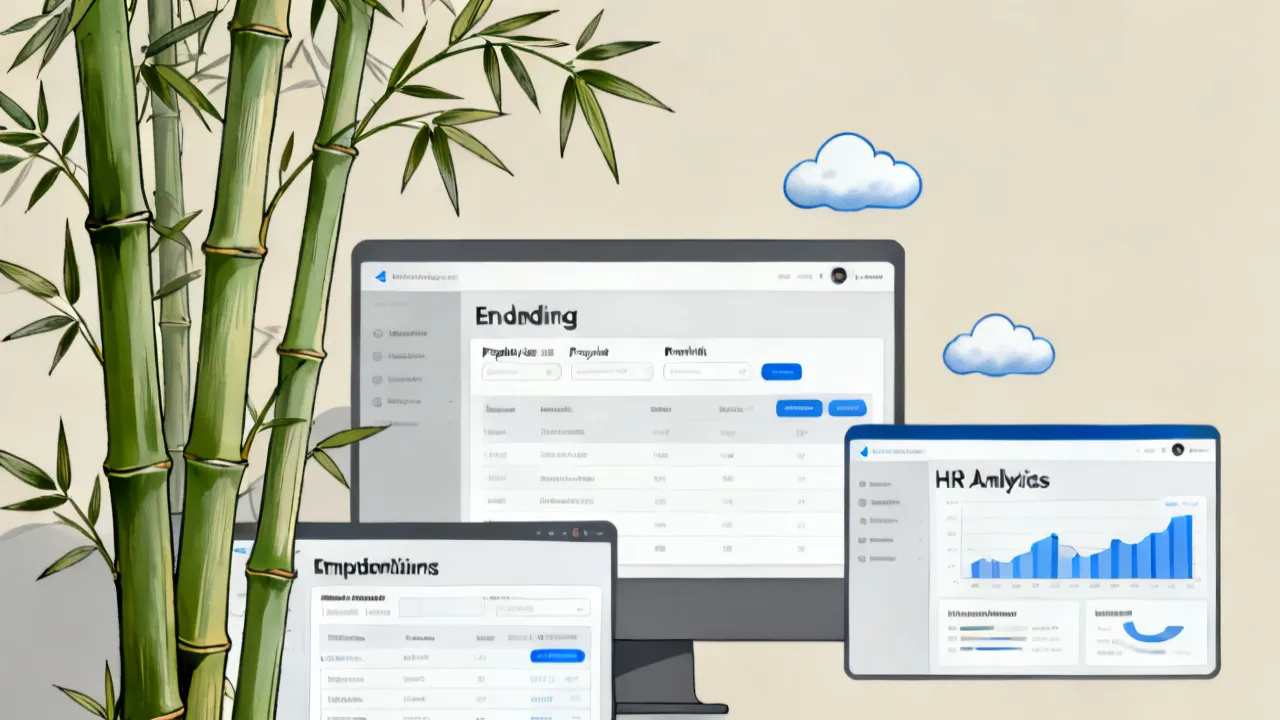
Very important: choose Plansource BambooHR based on your workflow, compliance needs, and integration requirements
If you’re considering Plansource Bamboohr alongside a dedicated HR system such as BambooHR, the top decision hinges on three practical questions: (1) How will your HR processes run end-to-end (onboarding, employee records, approvals, and reporting)? (2) What integrations do you already rely on (payroll, SSO, benefits, accounting, or HRIS-adjacent tools)? (3) Which administrative constraints matter very—data governance, role-based access, auditability, and adoption?
An objective evaluation approach prevents you from selecting software based solely on UI impressions or brochure features. From an industry perspective, organizations succeed when they map HR operations as a set of repeatable workflows, then confirm that the selected platform can support those workflows without excessive manual work. In other words, a good HR technology decision is less about “which product sounds best” and more about “which product set will behave predictably under real operational pressure.”
Why “Plansource” plus a BambooHR-style HRIS model is often evaluated together
Companies frequently evaluate a broader HR operations stack, where one vendor strengthens service delivery or workflow structure and another strengthens the HR database and human-facing HR workflows. In that sense, “Plansource Bamboohr” typically represents a combined consideration: how a provider supports your HR team’s operational cadence, and how a system like BambooHR structures employee data, access, and HR reporting.
From an expert standpoint, the critical point isn’t whether a platform is feature-rich; it’s whether the solution reduces friction across roles—HR specialists, managers, and employees. That includes how requests are submitted, how status updates are tracked, and how the system maintains consistent employee record changes over time. If HR can’t rely on consistent data structures, the entire organization loses trust in the HR “source of record,” and then even good features won’t be used effectively.
When you evaluate Plansource BambooHR-style approaches together with BambooHR-style HRIS capabilities, you also evaluate operational ownership: who will be responsible for what, how decisions will be routed, and how exceptions are handled. A common failure mode in HR technology deployments is assuming that workflows will be self-evident once a tool is installed. In practice, workflow routing, escalation rules, and responsibility boundaries must be designed with the same care as the software configuration.
What a strong HR platform should do well in day-to-day operations
When you evaluate options related to Plansource Bamboohr and BambooHR, look for consistent capabilities across the HR lifecycle:
- Employee records and data hygiene: reliable, well-structured profiles, change tracking, and controlled edits. “Data hygiene” is not a one-time cleanup effort; it’s ongoing governance that prevents duplicates, incomplete entries, and conflicting updates from different roles.
- Onboarding and offboarding workflows: task assignment, document collection, timeline visibility, and accountability for both HR and managers. This should include not only the happy path but also what happens when tasks are delayed or missing.
- Approvals and role-based actions: clear permission boundaries so managers can do what they must, without overexposing sensitive data. Approvals should be designed so that reviewers can act quickly with appropriate context and minimal back-and-forth.
- Reporting and HR analytics: structured reporting that supports operational planning rather than vanity dashboards. Operational reporting should answer questions like “How many onboardings are in progress?” and “Which approvals are overdue?”
- Security and compliance posture: access controls, audit logs (where applicable), and robust administrative governance. Security includes not just encryption but also how roles, permissions, and administrative actions are managed over time.
Even if your HR org is small, these elements matter. Many operational problems emerge from inconsistent record updates or unclear ownership of HR tasks—not from missing “nice-to-have” features. A small HR team can tolerate limited tooling variety, but it cannot tolerate unclear workflow ownership, redundant data entry, or approvals that stall because the approver lacks the right information.
That’s why it’s useful to evaluate both the workflow layer (how tasks move from request to completion) and the data layer (how employee records remain consistent and trustworthy). When those layers align, employee experiences are smoother and HR operations become more predictable.
Supplier and implementation considerations you should verify early
Software selection often fails during implementation. To avoid that, treat supplier evaluation as a two-stage process: (1) confirm functional fit, then (2) validate the implementation approach. For teams comparing Plansource Bamboohr-related approaches with BambooHR, focus on:
- Implementation timeline realism: confirm onboarding, migration support, and expected go-live phases. Ask how timeline risk is managed—especially if your employee data is messy, your approvals are complex, or your integrations are non-trivial.
- Data migration responsibility: identify who maps fields, how historical data is handled, and what “source of truth” will be. If historical performance reviews, employment dates, or compensation history matter for reporting, the migration approach must explicitly cover those data types.
- Integration scope: list each system you must connect (identity providers for SSO, payroll workflows, benefits, document storage). Verify whether the integration is a standard connector, custom configuration, or requires additional middleware.
- Change management support: determine what training materials and adoption support are included for managers and employees. “Change management” should include role-based training and communication planning, not just a single training session.
- Support model: clarify escalation paths, response-time expectations, and how issues are triaged. Also ask whether you have direct access to a technical resource if something breaks, versus only ticketing through a general queue.
In many HRIS deployments, the “price” becomes less important than the overall total cost of ownership (TCO), including implementation effort, admin time, and ongoing support needs. A cheaper subscription can become more expensive if it requires heavy customization, frequent manual workarounds, or repeated data cleanup cycles.
Additionally, consider the human cost: HR teams may spend weeks re-learning workflows after go-live, or managers may struggle to find tasks if navigation and permissions are not well designed. A strong supplier should proactively reduce that risk by giving you a clear implementation plan and measurable success criteria.
Typical pricing: how to think about cost without relying on unverified numbers
You requested price information, but without verified and current pricing details for a specific contract, it’s top to avoid quoting exact figures. In practice, HRIS platforms and HR service providers usually price based on factors such as number of employees, module selection, and implementation scope. If a vendor quotes pricing after a discovery call, ask for a written estimate that includes:
- Base subscription (by user or employee count): confirm which counts are used and how seasonal headcount changes are treated.
- Any add-on modules (onboarding, advanced reporting, integrations): clarify which modules are included in the baseline package and which are optional.
- Implementation fees (configuration, migration assistance): specify deliverables, responsibilities, and milestones. This is where many “surprise costs” originate.
- Training and support scope: clarify what training is included (HR admins only, managers too, employees too) and how many sessions are covered.
- Integration or consulting costs, if applicable: request a breakdown of any professional services costs and a description of what counts as “custom” versus “standard.”
For an objective evaluation, request a comparable line-item quote for both the Plansource-focused and BambooHR-focused paths. That method lets you compare not only the sticker price, but also the deliverables included in that price.
It can also help to create a “cost-of-mismatch” view. For example: if one path offers better operational workflow guidance but requires more admin setup, you should estimate the ongoing admin hours (even approximately). Similarly, if one path handles integrations more reliably out-of-the-box, the cost impact may show up later as fewer disruptions and less manual correction.
When you request quotes, ask for a documented assumptions section. If the vendor’s assumptions don’t match your environment—like employee count, approval steps, or integration complexity—you may later discover you weren’t comparing like-for-like.
Market context: what analysts and official sources say about HR technology
To ground the decision in reliable context, it helps to understand why HR platforms are being adopted more broadly. Industry research consistently highlights that organizations invest in HR technology to improve data consistency, automate administrative tasks, and support workforce analytics. For example:
- Gartner research and guidance on HR technology emphasizes the move toward digitized HR processes and scalable HR data management. (Gartner methodology and subscription-based access may apply.)
- SHRM (Society for Human Resource Management) regularly publishes HR technology perspectives, especially around adopting systems that improve HR service delivery and compliance.
- Society for Human Resource Management (SHRM) and similar HR bodies often discuss workforce management and HR operations evolution, reinforcing that adoption depends on governance and process design, not just product features.
Note: If you need exact citations for a particular report, share the report name you’re using or your internal procurement references, and I can help you format and interpret them for your evaluation pack. It’s often helpful to include at least a short “why now” paragraph in your internal memo—especially for stakeholders who question why HR needs yet another system.
In many organizations, the “why now” is driven by specific symptoms: inconsistent onboarding, fragmented employee documentation, manual spreadsheet tracking, or slow approvals for role changes. Those symptoms provide a business case for workflow automation and a stronger HR data model. When your evaluation is tied to those real symptoms, it becomes easier to justify the decision and set measurable success outcomes.
Localized evaluation mindset: “nearby” operational realities still matter
Even when HR software is cloud-based, implementation is local in practice. Organizations operate with different norms around onboarding cadence, manager availability, HR staffing, and internal approvals. If your context is described as “nearby” (rather than a specific city or country), the key is to adjust your evaluation to how employees communicate and how your HR team documents processes.
For example, teams near major business hubs often expect faster onboarding throughput and more frequent cross-team coordination; teams in quieter regions may prioritize clarity of process and reduced administrative burden instead. In both cases, a shared reality remains: employee expectations around response times and transparency differ based on how HR communicates internally.
So when you evaluate Plansource Bamboohr-style operational workflows versus BambooHR-first HRIS workflows, consider localized adoption factors:
- Communication habits: Does your workforce communicate mostly through email, chat, or ticketing?
- Manager workload patterns: Are managers available for approvals quickly, or are approvals often delayed due to meeting cycles?
- Onboarding cadence: Are hires scheduled predictably, or do you hire in bursts?
- Document norms: Do you standardize documents and templates already, or do teams vary significantly by department?
What doesn’t change is the need for consistent employee data governance and workflow ownership—those are universal operational drivers.
Comparison table: when Plansource Bamboohr-style setups fit top vs BambooHR-first approaches
The following table reframes typical “supplemental” factors as a practical comparison for decision-makers. (No links are included, per your instructions.)
| Evaluation factor | Plansource Bamboohr-style approach (service + HR workflow orientation) | BambooHR-first approach (HRIS-centered HR data + workflows) |
|---|---|---|
| Primary goal | Strengthen HR operations through guided processes and structured delivery | Centralize employee data and HR workflows with an HRIS backbone |
| Top fit | Teams that want strong operational support and clearer execution structure | Teams that want a consistent employee record system and streamlined self-service |
| Implementation focus | Workflow rollout, process coaching, operational readiness | Data migration, configuration of fields/permissions, HR workflow setup |
| Integration priorities | Connections to payroll/benefits and operational tooling may be emphasized | Integration to identity, reporting, and surrounding HR tools may be emphasized |
| Admin burden | Often reduced when operational guidance is strong | Reduced through HRIS automation, but governance still requires active admin roles |
| Reporting and analytics | Operational reporting aligned to HR service delivery outcomes | HR reporting with HRIS data consistency as the foundation |
| Procurement comparison method | Compare deliverables, training, and rollout services alongside subscription fees | Compare module scope, migration/configuration inclusions, and good admin effort |
Step-by-step guide: how to evaluate Plansource Bamboohr and BambooHR objectively
Use this sequence to reduce bias and create a decision record your procurement and HR leadership can trust.
- Map your HR workflows first: list onboarding, record updates, approvals, time-sensitive tasks, and manager actions. Assign “system of record” expectations for each data type. Include exceptions: rehires, transfers between departments, and “temporary” roles that become permanent later.
- Define role-based requirements: determine who can view or edit which fields and which actions require approvals. Create a permissions checklist. Also decide what managers can do self-serve versus what must go through HR.
- List integrations you cannot compromise: identity/SSO, payroll, benefits administration, document storage, and any existing HR tools. Confirm whether integrations are supported out-of-the-box or via additional configuration.
- Request a written pricing and scope breakdown: ask for line-item cost and what is included in configuration, migration, and training. Compare proposals on scope, not just subscription price. Ensure pricing assumptions match your workforce size, locations, and approval complexity.
- Validate onboarding process capability: test task assignments, document collection, timeline tracking, and responsibility flows for both HR and managers. Confirm notifications: are reminders automatic, and do approvers get nudged appropriately?
- Run a data governance test: evaluate how employee record changes are handled, how updates are audited (if supported), and how duplicates or inconsistent entries are prevented. Include scenarios like correcting a typo years after hiring and updating multiple attributes at once.
- Assess reporting for operational decisions: confirm that reporting supports real HR questions (headcount, onboarding completion, policy acknowledgement tracking if relevant), and that exports/imports match your needs. Ask what happens when you need to report on data that exists in multiple locations or systems.
- Conduct adoption planning: confirm training deliverables for HR admins, manager users, and employees. Ask how the vendor measures or supports adoption. Consider including a “manager readiness” checklist, since managers often become the bottleneck in approvals.
- Perform a pilot with representative roles: pick real scenarios (new hire, role change, termination, policy update). Measure time saved and error reduction compared to your current workflow. Capture feedback not only from HR but also from the roles that submit and approve tasks.
- Decide using a documented scoring rubric: weight criteria like integration reliability, governance, ease of administration, implementation support, and total cost of ownership. Use a consistent scoring method so stakeholders can see how decisions were made.
Conditions and requirements to check before you sign
These conditions help ensure the platform you choose matches your operational constraints. Treat them as requirements for acceptance, not afterthoughts.
- Minimum user and permission needs: verify that the platform supports your approval chains and role boundaries without custom workarounds. If you need granular controls for sensitive fields, confirm how you’ll implement them and who will maintain them.
- Data migration scope: confirm who owns mapping and cleansing, how missing data is handled, and how “source of truth” is defined after go-live. If you migrate historical policy acknowledgements, clarify whether documents or only metadata are transferred.
- Security and access controls: confirm encryption practices and administrative controls. For regulated contexts, align with your internal security policies. Ask about tenant isolation, admin role management, and how access reviews are supported.
- Service-level expectations: clarify support hours, escalation paths, and how urgent issues are handled. Define severity levels: what counts as Sev 1 (e.g., system down, payroll-impacting data sync errors), and what is the response timeline?
- Change control: ensure configuration changes follow a controlled process to avoid unintended consequences in HR record systems. For example, if you change field permissions, how will you test and roll out that change?
- Training and documentation: require role-specific training materials and documentation for HR admins and managers. Confirm whether you get recorded training, user guides, or admin runbooks.
- Exit and portability considerations: confirm how you can export HR data in a structured format if you ever change systems. Also confirm retention and deletion rules and whether you can fulfill legal holds or record retention policies.
Industry expert perspective: how to avoid the very common evaluation mistakes
In HR technology decisions, the failures I see very often are predictable:
- Feature-first comparisons: teams compare lists of capabilities but skip workflow ownership mapping. The result is a system that looks good yet doesn’t reduce day-to-day work. The cure is a workflow map that ties each capability to a step in your process.
- Unclear integration boundaries: stakeholders assume integrations exist “somehow.” Later, the team discovers a missing integration or an integration that requires additional services. The cure is to list integration requirements early and confirm which team (you vs vendor) is responsible for integration work.
- Insufficient attention to governance: if permissions and admin roles are not carefully designed, HR teams spend time correcting records instead of focusing on employee support. The cure is to implement a permissions model and test it with real users, not just admin demos.
- Ignoring adoption realities: employees may not use systems if tasks are poorly explained. Adoption is often a process design issue, not a software issue. The cure is to develop role-specific communication and measure adoption during a pilot.
Using a structured evaluation—like the steps above—lets you compare Plansource Bamboohr and BambooHR as operational tools rather than abstract product names. This is how you prevent your organization from making a decision that looks good in a demo but fails in the middle of your next onboarding wave.
Deep dive: how to evaluate workflow fit beyond “does it have onboarding?”
Many evaluations stop at a superficial level: “Does the system support onboarding tasks?” A better evaluation asks how the system behaves when onboarding is not perfectly scheduled and when multiple stakeholders are involved. A workflow fit assessment should answer detailed questions like:
- How are tasks assigned? Can tasks be auto-assigned to the right manager, recruiter, IT admin, or HR specialist based on role or location?
- How are due dates determined? Are due dates based on hire date, start date, or a configurable offset? Are reminders configurable?
- What happens when tasks are overdue? Do you have escalation logic or reporting that highlights bottlenecks?
- Can tasks be reused? If you have recurring onboarding patterns by department, can templates be maintained and updated?
- How are exceptions handled? For example, if a document request fails or a background check has different timelines by role, can you adapt the workflow without rebuilding it from scratch?
In Plansource Bamboohr-style operational setups, workflow guidance can be a major value: the system might encourage consistent execution and reduce ad-hoc task management. In BambooHR-first approaches, the value might show up in structured employee data that makes workflows easier to personalize and report on. Either way, you should evaluate how these capabilities reduce manual work, reduce errors, and improve transparency for employees.
Deep dive: employee data governance—what to measure and test
Data governance is often described, but rarely tested in a way that reveals operational weaknesses. A governance test should include both structure and behavior. Structure means: Are fields organized logically and consistently? Behavior means: Are changes controlled and traceable?
Here are specific governance behaviors to validate during your pilot:
- Controlled edits: Can users edit their own information, and are sensitive fields restricted to HR or admins? What about edits that require approval?
- Change history: If a field changes, can you view what changed and who changed it? If audit logs exist, where are they accessed?
- Duplicate prevention: If two records accidentally get created, what tools exist to merge or manage duplicates? Is there a process for preventing duplicates from entering the system during imports?
- Data validation rules: Are there constraints to prevent invalid values (e.g., incorrect date formats, invalid job codes)?
- Approval paths for sensitive updates: For example, changes to compensation-related fields (if included) should not be editable by unauthorized roles. Even when compensation is out of scope, similar logic may apply to contract type or location.
When you compare Plansource Bamboohr-style approaches versus BambooHR-first approaches, you’re essentially comparing how each path handles these governance requirements. If your organization is subject to audits, compliance obligations, or strong internal controls, governance testing should be treated as a requirement—not a nice extra.
Deep dive: permissions design—how role-based access should work in practice
Role-based access isn’t just about hiding fields; it’s about designing how work gets done. A well-designed permissions model ensures:
- Managers can complete their responsibilities quickly.
- Employees can access the information they need without seeing sensitive details.
- HR admins can manage records efficiently without accidental overexposure.
- Approvers see the context required to make decisions.
During evaluation, ask to review example permission configurations:
- Manager role: Can managers view only their direct reports? Can they request updates? Can they approve certain changes?
- HR specialist role: Can HR edit core fields freely? Are there restricted fields that require additional privileges?
- Admin role: Who can change field settings, workflow configuration, permissions, and user access?
- Employee role: What can employees update (contact info, addresses, emergency contacts) and what is restricted?
Also verify how permissions behave across departments, locations, or organizational units. A common issue is that initial demos show the “happy path” for one department, but permissions become messy when multiple departments share similar workflows or when employees transfer between units.
Integration requirements: mapping the “system ecosystem” not just the HR system
Integration requirements are often the deciding factor. Even if the HRIS has excellent onboarding and employee record functionality, the HR operations experience becomes painful if integrations are incomplete or unreliable.
To evaluate Plansource Bamboohr vs BambooHR-style approaches, you should build an integration map. Start by listing your systems and the data flows between them. Example systems include:
- Identity/SSO: Okta, Azure AD, Google Workspace—whatever your organization uses.
- Payroll: to ensure employee status and pay-related details remain accurate.
- Benefits administration: to ensure enrollments, qualifying life events, and eligibility updates happen correctly.
- Document storage: to ensure HR documents are stored, categorized, and retrieved consistently.
- Accounting/finance: for any headcount or cost analytics that feed financial planning.
- Other HRIS-adjacent tools: performance management, learning management, recruiting systems, or ticketing platforms.
Then define what “good integration” means:
- Data consistency: Are fields synced both ways or one way?
- Timing and latency: How quickly do updates propagate?
- Error handling: If an integration fails, what happens? Is there a queue? How do HR admins discover and fix issues?
- Change tolerance: If you update a field name in one system, do integrations break?
A very common problem is underestimating identity and provisioning. If SSO user creation is not fully automated, you can still log into the HR system, but your onboarding workflows may stall because access isn’t provisioned when tasks need to be completed.
Therefore, confirm your provisioning workflow. For example: when a new hire is added, is the user automatically provisioned? When an employee terminates, is their access automatically deactivated? If not, you may end up with manual offboarding steps that create security risk and operational delays.
Reporting and analytics: define “operational decisions,” not just “dashboards”
Reporting is often misunderstood. Stakeholders might ask for “analytics” and the project team might interpret that as a generic dashboard. Better reporting aligns with specific operational decisions.
Examples of operational decisions HR leaders often need include:
- Onboarding throughput: Are new hires completing onboarding tasks on time? Which steps cause delays?
- Approvals health: Are approvals delayed due to missing context or unresponsive approvers?
- Policy acknowledgment tracking: Which employees have not yet acknowledged required documents?
- Data completeness: Are employee records complete for required fields (department, location, employment type, emergency contact, etc.)?
- Offboarding compliance: Are offboarding steps completed before the termination date?
To evaluate Plansource Bamboohr and BambooHR approaches, ask how reporting is created and maintained. Is reporting configured by admins, or do you need ongoing vendor support? Can you export and integrate reporting into your existing BI tools? Can you filter by location, department, or manager chain?
Also evaluate audit and compliance reporting needs. If you operate in regulated environments, you may require a report showing access changes, record modifications, or acknowledgment timestamps. Reporting requirements should be captured early and included in your acceptance criteria.
Adoption and change management: make the system usable for managers and employees
Even the best HR workflow fails if users don’t adopt it. A robust evaluation should include a plan for training and adoption that respects how each user group works.
Consider three distinct audiences:
- HR admins and specialists: They need operational confidence—how to manage fields, approvals, workflows, and exceptions.
- Managers: They need speed and clarity—how to complete tasks correctly and quickly, and how to understand what they’re responsible for.
- Employees: They need transparency and trust—where to find information, what they must complete, and what happens next.
During pilot evaluation, gather feedback on usability and clarity:
- Can managers quickly find assigned tasks?
- Are employees notified when they need to take action?
- Are tasks understandable without HR explanation?
- Do reminders reduce delays?
- Do users understand who to contact if something is blocked?
When you compare Plansource Bamboohr-style service-oriented setups to BambooHR-first HRIS setups, adoption support may differ. A vendor may offer training, office hours, or workflow coaching. Another vendor may rely more on your internal admin team. Neither approach is inherently better, but you should evaluate the adoption resources included in the contract and the success criteria you’ll hold them to.
Implementation planning: how to avoid “project drag” in HRIS rollouts
HRIS projects can drag on when scope is unclear or when data migration and integrations are treated as last-minute items. You can reduce project drag by planning around milestones and by clarifying responsibilities between you and the vendor.
Key implementation milestones to define:
- Discovery and workflow sign-off: confirm the workflow map, approvals, and role responsibilities.
- Configuration freeze: define when configuration stops changing and moves into testing.
- Migration readiness: confirm data mapping, cleansing process, and validation steps.
- Integration test window: run end-to-end sync tests in a sandbox or test environment.
- Pilot execution: run representative cases through the workflows.
- Go-live cutover plan: define what happens before and after the final switch.
- Hypercare period: define support availability for the first weeks after go-live.
A strong vendor plan includes explicit dependencies. For instance: you may need to provide a field mapping spreadsheet; you may need to identify approvers; you may need to confirm payroll data structure; you may need to finalize templates for documents. Clarifying these dependencies reduces delays and prevents the team from “waiting on someone” without an accountable owner.
Pilot design: what scenarios to test so you learn what matters
To evaluate Plansource Bamboohr and BambooHR objectively, your pilot should include scenarios that reveal differences in governance, workflow behavior, and user experience. Choose scenarios that reflect both common and complex HR events.
Example pilot scenarios:
- New hire onboarding: test task assignments, manager approvals, document collection, and employee acknowledgements.
- Role change: test what changes in the employee record, which fields update, and whether approvals are triggered.
- Location transfer: test if workflows and reporting reflect the new location and whether permissions adjust.
- Policy update: test that acknowledgements capture the correct time and re-acknowledgment requirements.
- Termination/offboarding: test offboarding tasks, data access changes, and record status updates.
- Exception handling: test what happens when tasks are overdue, when fields are missing, or when an approver is unavailable.
Also test reporting outputs during the pilot. If reporting can’t answer operational questions in a usable way, you may not realize it until after go-live. Asking these questions during the pilot ensures the system supports real HR management needs.
Governance after go-live: who manages the system once the project ends?
One of the most overlooked aspects of HRIS evaluation is post-go-live governance. Even a well-implemented system requires ongoing admin management, process improvement, and user access review.
Ask each vendor:
- Who owns ongoing configuration changes?
- What training or admin runbooks will you provide?
- How do you request enhancements or handle change requests?
- Do you provide best-practice documentation for permissions, field management, and workflow maintenance?
- What is the process for handling user lifecycle changes (new managers, new HR admins, role changes)?
In Plansource Bamboohr-style approaches, governance responsibilities might be shared more heavily with service teams. In BambooHR-first approaches, governance might depend more on your HRIS admin team. Neither is wrong, but you must design for sustainability. Your goal should be to reduce dependency on vendor support for routine operations.
Data lifecycle and compliance: retention, auditability, and record access
Compliance needs vary by industry and location, but most organizations need to answer similar questions about data lifecycle. Your evaluation should cover:
- Retention policies: How long are records retained, and how are deletion requests handled?
- Auditability: Is there a way to identify who changed what and when? Are audit logs accessible to admins?
- Access reviews: Can you run periodic access reviews and prove least-privilege access?
- Legal holds: Are there mechanisms to preserve records if required?
- Access for employees vs admins: Are sensitive documents and personal data protected appropriately?
If you operate in a regulated context, you should align your evaluation to your internal security and compliance policies. That might include requirements for encryption, data residency, and third-party access controls. Even if you don’t need deep customization, you still need clarity on how security posture is maintained.
Because HR data is sensitive, you should treat governance as a core product requirement. If you rely on a system that cannot support audit and access controls, you may face expensive remediation later.
Cost-of-ownership beyond subscription: time, risk, and operational friction
TCO is more than subscription price. In HR operations, the “cost” frequently appears as admin time, employee time, manager time, and the risk of errors.
When you compare Plansource Bamboohr-style approaches with BambooHR-first approaches, consider these cost dimensions:
- Admin effort: How many hours per week will be required to maintain workflows, permissions, and data integrity?
- Employee friction: Are employees required to do unnecessary steps, or do they get guided through correct actions?
- Manager workload: Are approvals easy to complete, or do managers struggle with context?
- Error cost: How often will record corrections be needed? What is the time to resolve them?
- Integration disruption cost: If integrations break, how quickly can the team fix them?
- Risk exposure: How likely are access or compliance problems if offboarding is incomplete?
It’s helpful to quantify these in your internal evaluation rubric even if you can’t calculate perfect numbers. Assign approximate weights and scores. This prevents your procurement process from becoming purely a pricing comparison when the operational outcomes matter more.
Decision framework: building a scoring rubric that stakeholders accept
A good scoring rubric makes the decision defensible. It also reduces internal conflict. Consider a rubric with categories that reflect both operational success and implementation realities.
Example rubric categories:
- Workflow fit and automation: how well the system supports onboarding, approvals, and task routing.
- Governance and permissions: how well role-based access, auditability, and controlled edits are supported.
- Integration reliability: how robust integrations are and how errors are handled.
- Reporting usefulness: how well reporting supports operational decisions.
- Implementation approach: realism of timeline, migration support, and change management.
- Adoption support: training coverage and adoption planning resources.
- Total cost of ownership: subscription plus implementation plus ongoing admin effort and risk mitigation.
During scoring, require evidence. For example, don’t score “workflow fit” based on demo impressions; score based on pilot results and documented acceptance criteria. This approach is particularly important when comparing Plansource Bamboohr-style solutions and BambooHR-first approaches because the value might show up differently—service guidance in one case, data-driven workflow structure in another.
FAQs
Is BambooHR the same as a “Plansource Bamboohr” solution?
No. “Plansource Bamboohr” is typically used to describe a combined evaluation of providers or an operational approach that includes a BambooHR-style HRIS component. BambooHR is an HRIS product; Plansource is commonly referenced as part of a broader HR operations context. Confirm the exact scope in your proposal. In procurement terms, clarity matters: you want a written statement of what the provider will deliver (service, configuration, integrations, training) and what you will deliver (data, approvals, internal ownership).
What should I ask about pricing when evaluating these HR systems?
Ask for a written line-item breakdown that includes subscription scope, employee count assumptions, implementation/configuration services, migration support, training, integration costs, and any ongoing support terms. Compare proposals on total included deliverables. Also ask for any “assumption-dependent” pricing items, such as additional locations, user counts, or advanced reporting needs.
Do I need integrations, or can we run without them?
You can sometimes run with minimal integrations for basic use cases, but many organizations eventually need connections to identity/SSO, payroll, benefits, and document workflows. List your must-have integrations before evaluating. If you delay integrations until after go-live, define the interim process so onboarding and record updates don’t stall.
How do I determine whether the solution will reduce admin workload?
Run a practical pilot with real scenarios: onboarding a new hire, processing an employment record update, and managing manager approvals. Measure time-to-completion and error frequency before and after. Additionally, measure “time to resolution” for exceptions—manual work often shows up most during exceptions.
What requirements are very important for compliance and data governance?
Role-based access, auditability where relevant, controlled editing of sensitive fields, and clear policies for data migration and updates are key. Align these requirements to your internal security and compliance standards. If you have retention and legal hold needs, confirm how those requirements are supported or configured.
What’s the top evaluation timeline for a decision?
A common approach is 2–6 weeks for discovery, scope confirmation, and testing, followed by a shorter pilot for workflow validation. The exact timeline depends on migration complexity and integration readiness. Make sure the timeline includes enough time for stakeholder review and for internal sign-off on permissions and workflow ownership.
Can we export our employee data if we switch systems later?
In very mature HRIS environments, exporting data is possible, but you should confirm the format, completeness, and any constraints. This should be part of your acceptance criteria. Ask about exported fields, record history availability, and whether attachments/documents can also be exported if required by retention or compliance policies.
Conclusion: make the choice by aligning workflow ownership, governance, and implementation scope
When teams evaluate Plansource Bamboohr alongside a BambooHR-style HRIS approach, the winning strategy is to focus on operational fit. Confirm how onboarding tasks, employee record governance, approvals, reporting, and integrations work together. Then validate pricing through transparent scope details rather than unverified numbers. With a structured assessment and a pilot grounded in real HR scenarios, you can select a platform that supports consistent HR service delivery—without turning implementation into a prolonged administrative burden.