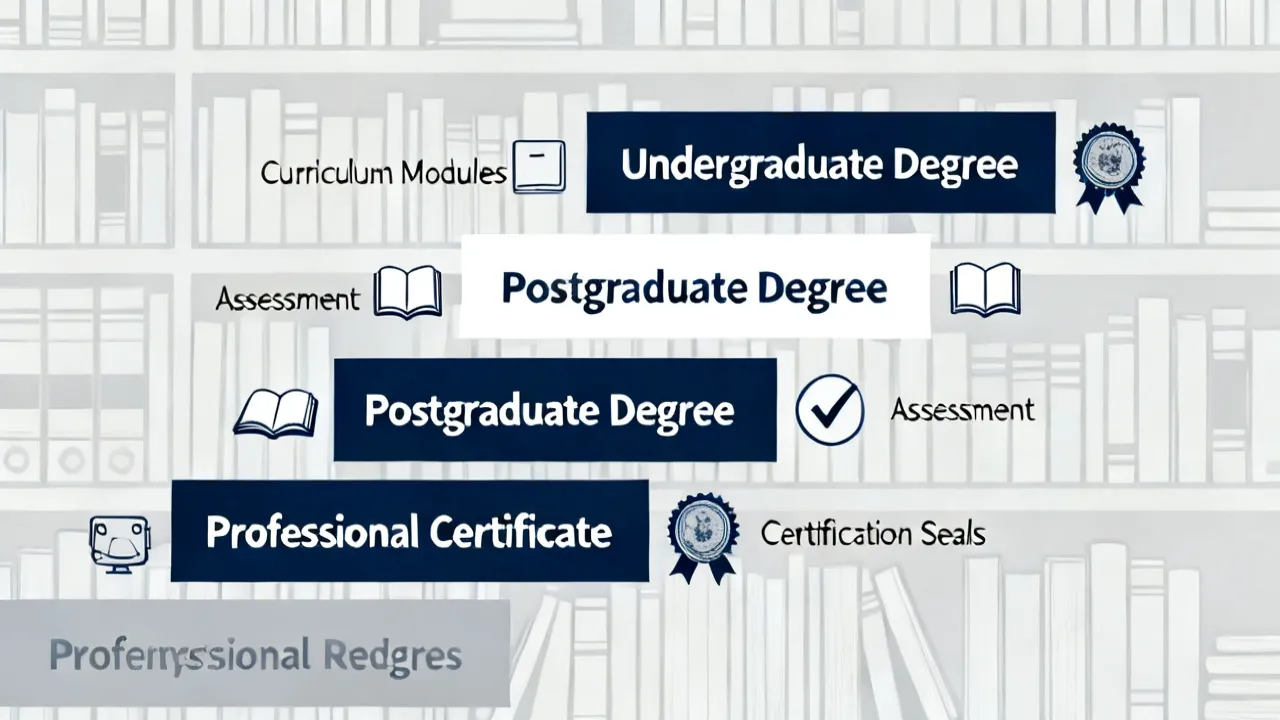
Understanding Libf Degrees: Eligibility, Pathways, and Value
This guide explains Libf Degrees, how they’re structured, and how learners can evaluate fit, credibility, and good value. Objectively, “Libf” commonly refers to a qualification label used by specific training or education providers, while “degrees” describes higher-education credentials designed for progressive study. Because offerings vary by institution, careful verification is essential.
1) Key takeaways on Libf Degrees
When people search for Libf Degrees, they usually want to understand what the credential actually represents, what learning pathways it supports, and how to assess whether it will help with career goals. The very important point is this: Libf Degrees are not automatically identical across providers. In practice, their content, assessment style, credit structure, and recognition can vary substantially—so evaluation should focus on documentation, accreditation/authorization status, assessment rigor, and clear entry-to-outcome alignment.
From an industry perspective, the top way to judge the value of any “degree-branded” qualification is to ask four questions early: (1) What is the awarding body? (2) What curriculum and learning outcomes are guaranteed? (3) What are the admission requirements and assessment conditions? (4) How is the credential recognized for your intended purpose? When learners follow this sequence, they reduce uncertainty and avoid mismatch between expectations and reality.
Another practical takeaway is that “degree” language can create a false sense of standardization. In many education markets, the word “degree” has strong reputational weight, but the real-world meaning depends on governance: who validates the curriculum, who examines students, how quality assurance works, and whether verification is possible using official sources. Put simply, the label is the starting point; the proof is in the structure, the rules, and the credential’s traceability.
Finally, it helps to separate three decisions that are often blended together in marketing: learning fit (will the program teach what you need?), credibility fit (can you verify the degree through authoritative channels?), and practical fit (can you complete it within your time, language, and schedule constraints?). A thorough evaluation process covers all three.
2) What “Libf Degrees” typically means in practice
In many markets, the term “Libf” functions as a recognizable label used by education providers or training organizations to brand a set of programs—often aligned with broader degree-awarding frameworks. However, “degrees” is a broad word: it can refer to different academic levels, credit frameworks, competency standards, and even different levels of regulatory oversight depending on the jurisdiction and the awarding institution.
For readers comparing options, it’s helpful to treat “Libf Degrees” as a starting identifier rather than a complete description. A credible program page should specify the following elements in plain language:
- A clear awarding institution (the body that issues the degree certificate)
- Program level (e.g., foundation, bachelor, postgraduate—terminology differs by country)
- Delivery format (in-person, online, blended) and expected study hours
- Assessment model (exams, coursework, practical projects, supervised placements)
- Entry requirements (education history, language requirements, work experience, etc.)
- Recognition pathway (how employers or licensing bodies interpret the credential)
If any of these elements are missing or vague, learners should assume additional due diligence is necessary. A common pattern in low-clarity offerings is the presence of promotional summaries without a “program specification” document (or without a syllabus that maps to outcomes). Another pattern is when the provider speaks about “accreditation” without identifying which body provides it, what scope it covers, and what standards were met.
In practice, what matters most is the relationship between the provider and the awarding institution. Sometimes the provider teaches and supports while another organization formally awards the credential. Sometimes the provider both teaches and awards. Sometimes an external examiner system exists. These differences affect how reliable the transcript is and how transferrable the qualification might be.
Another practical note: “Libf” may appear in different ways depending on the market. Sometimes it is part of a broader institutional name; other times it is used as a program brand. Your verification strategy should therefore focus on the underlying awarding body and documented program rules—not only the “Libf” label itself.
3) Why Libf Degrees attract attention
Several factors drive interest in Libf Degrees, especially among working adults and career switchers:
- Structured pathways: Programs marketed as degrees can offer a clearer route from entry to qualification than short courses.
- Employability framing: Degree-based study often connects academic learning outcomes to employable skills—when implemented well.
- Flexibility: Many providers present degrees with part-time or blended study patterns, which can reduce disruption to employment.
- Progression potential: Some learners use a first degree as a foundation for advanced specializations or further academic study.
That said, interest should be matched with verification. Industry hiring teams typically look for evidence that a qualification reflects genuine study—such as coherent curriculum content, assessed competencies, and credible issuance. Many hiring managers also expect the degree to be confirmable through official registers or using an awarding institution’s verification mechanism.
For career switchers, another attraction is the psychological certainty of a degree: it’s a tangible goal with a timeline, modules, and assessments. However, psychology can be a risk if the degree is not credible in the way you need. A “degree” can become a sunk-cost if it doesn’t satisfy employer screening, licensing requirements, or internal company education criteria.
For employers and industry partners, interest may also come from the supply of candidates who can be evaluated consistently. When degree systems are recognized and assessed with consistent rigor, employers can interpret transcripts with confidence. Therefore, the real interest in “Libf Degrees” often depends on whether the program’s academic integrity and verification are strong.
4) The “value” equation: learning outcomes, credibility, and cost discipline
Although readers often want “price information,” the very responsible approach is to treat cost as one variable among several. In the absence of verified, consistent tuition data for a specific Libf-branded degree, you should avoid making assumptions based on marketing language. A low initial tuition can be offset by exam fees, resubmission fees, technology fees, graduation fees, or additional charges for registration and assessments.
Instead, use a value framework:
- Cost-to-outcome alignment: Does the program’s curriculum match your career objective?
- Total cost clarity: Are there additional expenses (exams, materials, assessments, resits, enrollment fees)?
- Time-to-completion realism: Does the study workload fit your schedule?
- Credential portability: Will the degree be understandable and recognized where you want to work?
From an expert perspective, “cheap but unclear” is often more expensive in the long run. If a credential does not translate to recognition—academically or professionally—then the financial cost becomes secondary to lost time and opportunity. Learners can lose career momentum when time spent studying does not produce credible outcomes recognized in hiring pipelines.
It’s also important to treat “value” as multi-dimensional. Two degrees with the same nominal level (e.g., both are called bachelor) might differ in:
- How demanding the assessments are
- How much feedback and mentorship students receive
- Whether the final project requires original work and supervision
- Whether assessments are moderated or externally verified
- Whether learning outcomes are measured through consistent rubrics
Cost discipline means you do not rely on a single tuition number. You build a complete estimate that includes the “hidden friction” of the learning experience—time needed for feedback cycles, the likelihood of resits, and administrative requirements that might slow completion.
One useful tactic is to request a full cost breakdown and a study plan or recommended pace. If a program cannot provide these or answers are inconsistent, consider it a signal to continue searching. A high-integrity program should be transparent about both cost and workload.
5) Supplier and provider considerations (how to verify legitimacy)
People searching for Libf Degrees frequently ask about “supplier details.” In education, the “supplier” is effectively the provider that recruits, delivers, and supports the learner. But the very meaningful question is the institutional chain:
- Who awards the degree? (awarding body)
- Who delivers the teaching? (teaching provider)
- Who administers assessments? (assessment organization or internal/external exam boards)
- Who issues the final credential? (certificate issuance authority)
Many program brochures blur these roles. A responsible program description should make the relationships explicit. If they do not, request official documentation or clarification before enrolling.
Another legitimacy check is to look for a verifiable footprint: official websites, program pages hosted by the awarding institution, transcript samples, and credential verification mechanisms. While not all programs offer immediate transcript verification, awarding bodies typically have policies that explain how certificates are issued and how verification is handled.
When you contact a provider, avoid vague questions like “Is it accredited?” Instead, ask targeted questions:
- Which regulator or accreditation body covers the awarding institution or the program?
- What is the accreditation reference number (or the exact name of the accreditation scheme)?
- Who validates the curriculum and learning outcomes?
- How are grades determined and moderated?
- Is there an external examiner, moderation process, or audit?
If the provider can answer these in detail and provide documents or references, you usually have a higher-quality foundation for the rest of your evaluation. If they answer generally, the “degree-branded” program may still be legitimate—but you will likely need more due diligence and may need to test the recognition claim by asking potential employers or external parties.
6) Typical academic structure of Libf Degrees
While specifics vary by provider and jurisdiction, many degree-style programs share a common design pattern:
- Core modules that build foundational knowledge
- Specialization modules aligned to a chosen track or pathway
- Capstone or culminating assessment (project, dissertation, or integrated final evaluation)
- Academic support (tutoring, library resources, learning management systems)
For learners, the practical outcome is that Libf Degrees should demonstrate a coherent progression. If course titles sound disconnected from one another, that’s a warning sign. A program with sound structure will show a logical sequence from learning objectives to assessments.
To evaluate structure more deeply, look for:
- Module sequencing: introductory modules should logically feed into intermediate and advanced modules.
- Outcome mapping: learning outcomes should align with assessments (not just listed). For example, if a learning outcome is “apply statistical methods,” there should be a module and assessment that tests that skill.
- Progressive assessment difficulty: early assessments often test understanding and fundamentals, while later assessments test integration and problem solving.
- Capstone requirements: the final project/dissertation should require original work, demonstrate mastery, and follow a clear rubric.
Online or blended degrees often have additional structural elements: learning management systems, recorded lectures, live sessions, group work expectations, and rules for participation. The quality of online delivery depends not only on teaching materials but on whether assessments are credible and whether feedback is timely.
If you can, review sample module outlines, assessment brief samples, or anonymized grading rubrics. Even if you cannot see full details, legitimate programs frequently provide at least a framework of what to expect.
7) Entry requirements and conditions/requirements to review
Because degree programs commonly involve regulated or standards-driven assessment, entry requirements matter. You should look for explicit conditions such as:
- Minimum prior education (or recognized equivalence)
- English or language proficiency evidence (if relevant)
- Work experience considerations (where applicable)
- Attendance requirements for practical components
- Deadlines for module registration and resubmissions
- Plagiarism and academic integrity rules
Where programs use online assessment, check proctoring or verification methods. A lack of clarity around assessment controls can affect credibility and learner outcomes. If the program says “online exams” but does not explain how identity verification, academic integrity, and technical rules are handled, you should ask for details.
Entry requirements also include administrative and academic conduct conditions. For example:
- What happens if you miss a deadline due to illness or employment conflicts?
- Can you defer a module? Are there fees or time limits?
- Are extensions available, and what is the approval process?
- What are the rules for re-taking an assessment after failing?
- What is the consequence of academic misconduct findings?
Programs that provide clear, documented policies generally indicate maturity and an established academic governance structure. In contrast, programs that rely primarily on informal communication may be harder to navigate if disputes arise or if you need accommodations.
Another important dimension is eligibility for progression. Some degree pathways allow progression only if you meet credit thresholds or pass specific “gatekeeping” modules. Ask whether there are required modules to advance and whether those gatekeeping modules can be repeated and under what conditions.
8) Step-by-step evaluation guide (practical due diligence)
To help you evaluate Libf Degrees responsibly, here is a step-by-step guide you can follow for any provider you’re considering.
Step-by-step guide
- Confirm the awarding institution: Identify who legally awards the degree certificate. Look for the awarding body’s name on official pages and in the program specification. If possible, verify that the awarding institution has a relevant program listing.
- Request the program specification: Look for formal documentation describing learning outcomes, assessment methods, grading approach, and module list. If the provider cannot supply a structured specification, treat that as a credibility gap.
- Check recognition claims carefully: If the provider states that the degree is recognized, ask for the specific basis (e.g., accreditation references or formal recognition agreements). Ask whether recognition is automatic or requires additional steps.
- Review assessment rules: Understand grading criteria, resit policy, and academic integrity expectations. Ask for information about moderation, external review, and how final grades are determined.
- Estimate your total study workload: Compare your available hours with the program’s stated expectations. Include time for reading, coursework writing, assignment revision, peer feedback, and exam preparation.
- Validate delivery quality: Check tutor qualifications, student support services, learning resources, and feedback turnaround times. Consider contacting current or former learners for realistic insight.
- Ask about progression: If you want specialization or advanced study, confirm whether the first degree enables that next step and what prerequisites apply.
Conditions and requirements checklist
- Admission documentation: You may need transcripts, certificates, proof of prior learning, or evidence of work experience. Ensure the list of required documents is clear and obtainable.
- Language requirements: If taught in English, ensure you meet the required proficiency threshold. If the program accepts alternative evidence (e.g., workplace communication), ask for the exact criteria.
- Assessment participation: Confirm whether examinations require in-person attendance, whether they are scheduled globally or only regionally, and what accommodations exist if you cannot travel.
- Academic conduct compliance: Review referencing standards, plagiarism definitions, citation requirements, and whether the program uses similarity detection tools.
- Time-bound policies: Know enrollment validity periods, module start dates, and deferral conditions. Ask whether you will need to pay extra to re-register.
- Student support boundaries: Understand what support is academic (tutoring, feedback) versus administrative (enrollment, advising). Confirm communication expectations.
- Complaint and appeals processes: Ask how you can appeal an assessment or raise a formal complaint, and what timelines apply.
9) Comparative overview (useful when choosing among Libf Degrees)
The table below compares typical decision factors. It is designed to help you compare providers on consistent criteria rather than marketing language. (No links are included.)
| Evaluation factor | What to look for in Libf Degrees | Why it matters for outcomes |
|---|---|---|
| Awarding body clarity | Named institution that issues the degree certificate | Impacts recognition, transcript integrity, and verification |
| Curriculum transparency | Module list and learning outcomes described in detail | Ensures the degree develops the competencies employers expect |
| Assessment rigor | Defined assessment methods, grading approach, and resit policy | Reflects academic quality and supports credible student evaluation |
| Admission requirements | Clear eligibility rules and documented entry criteria | Reduces the risk of enrollment mismatch or later academic barriers |
| Support and delivery | Tutor guidance, feedback cycle, study resources | Improves completion rates and learning effectiveness |
| Recognition pathway | Evidence of how the degree is interpreted locally and internationally | Determines whether the degree helps your career plan |
| Total cost and fees | All-inclusive cost breakdown (tuition plus recurring or optional fees) | Prevents budget overruns and supports realistic planning |
| Quality assurance mechanisms | Information about moderation, external examiners, or audits | Improves trustworthiness and reduces grade inconsistency |
| Credential portability evidence | Verification method details and transcript documentation | Helps you confirm authenticity with employers or regulators |
10) Localization notes: understanding regional expectations
Even without a specific city or country provided in the keyword set, it’s important to note that educational recognition and employer expectations vary by region. For example, in some places, degree verification is tightly tied to official awarding bodies and credential registers; in others, employers may focus more on demonstrated skills and work portfolio.
Practical advice for learners: match the degree evaluation criteria to the environment where you want to work. If you are targeting roles that require documented academic standing, prioritize awarding body credibility and formal assessment records. If you are targeting skill-based roles, still verify the degree’s authenticity, but weigh curriculum relevance more heavily.
In regulated professions—where licensing or certification is required—degree recognition might depend on additional conditions beyond general “accreditation.” Sometimes the licensing body demands a specific type of degree, a specific curriculum content, or minimum credit hours in particular subjects. Therefore, “degree level” alone may not guarantee eligibility.
Even in non-regulated industries, internal screening can be strict. Some organizations filter by degree title, awarding body reputation, or transcript verification. If a degree cannot be verified quickly, candidates may be disadvantaged even if the learning experience was strong.
To localize your decision, consider these steps:
- Identify target job titles and read their education requirements carefully.
- Check whether employers mention “recognized degrees,” “accredited programs,” or specific awarding bodies.
- Ask your prospective employer (or HR) what verification method they accept.
- If you plan to move countries, check whether the degree is likely to be recognized in your future region.
This is why the four-question framework (awarding body, learning outcomes, admission/assessment conditions, recognition pathway) is powerful: it remains relevant regardless of region.
11) FAQs about Libf Degrees
FAQ 1: Are Libf Degrees the same across all providers?
No. Even if a program is branded similarly, curriculum design, assessment policies, and awarding authority can differ. Always verify the awarding body and request the program specification. Two programs that share “Libf” branding might still be very different in outcomes and credibility.
FAQ 2: What “supplier details” should I request before enrolling?
Ask for the awarding institution, delivery provider, assessment approach, module list, entry requirements, and a full cost breakdown (including any additional fees). Also request documentation about quality assurance (e.g., moderation or external review) and the credential verification mechanism.
FAQ 3: How can I judge credibility without relying on marketing claims?
Look for verifiable documentation: a named awarding body, a structured syllabus with learning outcomes, clear assessment rules, and a transparent recognition basis. If recognition is asserted, ask for the specific basis and evidence. You can also compare what is promised (outcomes) against what is assessed (assessment briefs, rubrics, and examination format).
FAQ 4: Do Libf Degrees improve employability automatically?
Not automatically. Employability depends on curriculum relevance, assessed competencies, and how employers interpret the credential. The degree should connect to your target role’s skill requirements. Sometimes an employer values proof of competence more than the credential name, so your degree should ideally produce evidence you can show in applications (projects, portfolio artifacts, case studies, or graded work outputs where allowed).
FAQ 5: What should I do if I’m unsure whether my prior education qualifies?
Contact admissions with your transcripts and any certificates of completion. Request an evaluation of eligibility or recognized equivalence in writing. If the program uses prior learning assessment (RPL) or recognition of experience, ask for the criteria and evidence requirements so you can prepare properly.
FAQ 6: Can I transfer credits or progress to further study?
Credit transfer depends on the awarding and recognizing institutions. Ask about articulation arrangements and whether your completed modules meet prerequisites for progression. Also ask about grade requirements: some institutions only accept credits if you achieve a minimum pass level.
FAQ 7: Is online delivery acceptable for degree outcomes?
Online delivery can be rigorous when assessments are controlled and feedback is structured. Evaluate the assessment model, proctoring/verification (if applicable), and academic support quality. A key question is whether online study reduces assessment credibility—legitimate programs tend to have well-defined identity verification and academic integrity measures.
FAQ 8: Where can I find reliable background information?
Start with official institutional documentation and any recognized quality assurance or accreditation references. If the provider cites external recognition, request the reference details so you can verify them through authoritative channels. You can also check whether the awarding body has a public method for confirming credentials.
12) Conclusion: making a confident choice with Libf Degrees
Choosing Libf Degrees is less about the label and more about what the credential actually delivers. The very robust approach combines verification of the awarding body, careful review of learning outcomes and assessments, and disciplined evaluation of total cost and requirements. When you apply this due diligence—step by step—you move from uncertainty to an informed decision grounded in how degrees are structured and recognized in real academic and employment contexts.
If you share the specific Libf-branded program name and the intended career outcome you’re targeting, I can help you build a personalized checklist for verification and fit.
Additional Expansion: Deepening Your Verification Process for Libf Degrees
Because “Libf Degrees” can be misunderstood as a single uniform qualification, it is useful to think like a verification officer: you would not only ask whether a degree exists, but whether the degree can be confirmed, traced, and interpreted correctly by third parties. That includes employers, educational institutions, and (when relevant) licensing bodies. Expanding your evaluation process can reduce risk in areas where marketing language might otherwise mislead.
13) Build a “document package” before you decide
A key step that many learners skip is assembling a document package early. Even if you are still deciding between providers, gathering the same types of documents from each option makes comparison easier and prevents “apples-to-oranges” confusion. Ideally, request:
- Program specification or validated syllabus (with learning outcomes)
- Assessment guide or module assessment briefs (at least samples)
- Entry requirements and admissions policy (including any equivalency rules)
- Grading and progress policy (including resit and resubmission rules)
- Student handbook or academic integrity policy
- Tuition and fee schedule (including all optional fees)
- Quality assurance description (moderation, external assessment, etc.)
- Credential issuance and transcript policy (what appears on transcripts)
- Recognition or accreditation references (with exact names and scope)
Once you have these documents, you can score each provider using consistent criteria. If a provider refuses to provide key documents (or provides only vague summaries), it is reasonable to treat that as a material risk factor.
14) Understand the difference between “awarded by” and “taught by”
One of the most important conceptual distinctions in degree evaluation is the separation between the entity that teaches and the entity that awards. Many providers market the learning experience but may not be the ones that validate the credential. Learners might encounter a degree certificate that carries the awarding body’s name, while the teaching experience might be delivered by a different organization.
This distinction matters because:
- The credibility of the certificate often depends primarily on the awarding body’s governance.
- Quality assurance typically involves processes at the awarding level (even if teaching is outsourced).
- Recognition claims should reference the awarding body, not only the teaching provider.
In practical terms, when you receive program documentation, check whether it clearly states who awards the degree. If the provider cannot clearly identify the awarding body, your ability to verify recognition and authenticity becomes limited.
15) Evaluate learning outcomes like an employer would
Learning outcomes can be written in many ways, but the ones that matter most are the outcomes that can be assessed and demonstrated. When reviewing program documentation, take the time to interpret each outcome as a measurable capability. For example:
- If a learning outcome says “apply knowledge of finance,” ask: is there an assessment that tests applying finance to case scenarios?
- If a learning outcome says “communicate effectively,” ask: is communication tested through presentations, reports, or structured writing with rubrics?
- If a learning outcome says “use research methods,” ask: is there a research-based module culminating in a capstone or dissertation?
If learning outcomes are generic and not tied to specific assessments, it can be harder to trust that the program builds the competencies it claims. A higher-quality program usually shows a link between curriculum, assessments, and outcomes.
16) Assess the realism of workload and study pace
“Flexibility” is a common marketing phrase. But flexibility without workload realism can lead to incomplete study, missed assessment deadlines, and burnout. Therefore, evaluate how “flexible” the program is in practice:
- Does the program provide a recommended pace (e.g., modules per term)?
- Are there attendance requirements for tutorials, live sessions, or placements?
- What is the average time you will need for reading and assignment writing?
- How many assessments are typically due at once?
- What is the feedback turnaround time, and how does it affect resubmissions?
It can also help to ask about how the program handles the real schedules of working adults. For example, can deadlines be aligned with weekends? Are there multiple assessment windows? Are deferrals allowed with clear policies? These factors influence completion success.
17) Look at assessment types and what they reveal
Assessment types are often the clearest signal of academic rigor. While every field has its own norms, you can still evaluate credibility by examining the assessment design:
- Closed-book or supervised exams: can test recall and structured reasoning, but require robust integrity controls.
- Open-book exams: can test application and problem solving, but must specify time limits, question design, and integrity rules.
- Coursework essays and reports: can demonstrate reasoning and research skills; credible programs specify citation rules and rubrics.
- Projects and case studies: should be structured with deliverables, milestones, and supervision or feedback.
- Capstones/dissertations: should have a clear research framework and a final evaluation rubric.
For online degrees, pay particular attention to how projects and final assessments are evaluated. The best programs have structured checkpoints (proposal, literature review drafts, final submission) that reduce the risk of last-minute work and provide evidence of learning progression.
18) Investigate quality assurance: moderation, external examiners, and audits
Quality assurance is often described in broad terms, but you can still ask concrete questions. When you inquire, use phrasing like:
- Is there internal moderation for marking consistency?
- Are there external examiners or external moderation processes?
- Are exam papers or assessment rubrics reviewed before implementation?
- Is there a policy for academic misconduct investigation?
- Are there student feedback mechanisms and how are they acted on?
A provider that can explain these processes at a practical level is usually more reliable. Conversely, if quality assurance is not described at all—or is only described as “we ensure quality”—it can be difficult to predict grading integrity and consistency.
19) Check transcript content and credential verification pathways
Even if the degree certificate looks credible, the transcript is often what employers and institutions evaluate. Ask what appears on the transcript:
- Module titles and credits
- Grades (and grade scale)
- Assessment outcomes (if provided)
- Final classification (if applicable)
- Dates of study and completion
Also ask how the degree can be verified. For example, some awarding bodies provide verification services, while others allow direct confirmation through official email channels. If verification is impossible or vague, the credential may be harder to interpret.
In addition, if you plan to apply to further study, check whether the transcript will be formatted in a way that partner institutions accept. Some credit transfer processes are strict about module naming and credit hours.
20) Estimate “total time cost” not just “total tuition cost”
Many learners focus on tuition and ignore time cost. But time cost is often the largest factor, especially for working adults. Consider the combined total cost of:
- Tuition and fees
- Time spent on assignments and revisions
- Time spent waiting for feedback
- Travel time (if any) for exams or practical sessions
- Opportunity cost of reduced working hours or reduced overtime
- Potential re-take or resubmission costs (financial and time)
A disciplined evaluation will approximate these costs and compare them to the expected employment benefits. It may also help to ask alumni about the expected pace and whether they felt the workload matched the promotional claims.
21) Evaluate “employability framing” with evidence
Employability framing can be helpful when it is evidence-based—when it shows how the program connects to employer requirements. To evaluate employability claims, look for:
- Industry-aligned curriculum outcomes (mapped to job skills)
- Realistic project briefs tied to professional tasks
- Mentorship or career support that is documented
- Internship or work placement options (if relevant)
- Portfolio guidance to translate assessed work into application materials
If the provider only says “we improve employability” without evidence, treat it as a marketing statement rather than a guarantee. Employability is not a product that degrees automatically deliver; it depends on how well the program trains and assesses the relevant competencies, and how employers interpret the credential.
22) Decide based on your career goal and risk tolerance
Your best choice depends on your specific goal: promotion in your current field, entry into a new field, meeting a licensing requirement, or building academic credibility for future study. Each goal has a different risk profile.
For example:
- If your goal is licensing eligibility, prioritize awarding body credibility and alignment to regulated curriculum standards.
- If your goal is job screening in a competitive hiring market, prioritize recognition verifiability and transcript credibility.
- If your goal is skill development and portfolio creation, prioritize curriculum relevance and assessment design—while still verifying authenticity.
This is why it helps to create a personal scoring rubric. Assign weights based on your priorities. Then evaluate each Libf degree option against your rubric using documents, not assumptions.
23) Ask about support when things go wrong
A degree program is tested not only by successful students but also by how it supports students when they struggle. Ask:
- What academic support is available (tutoring, learning coaches, writing support)?
- How is feedback delivered, and what is the format?
- Are there extension policies and are they transparent?
- What happens if you fail a module—can you repeat it, and what are the costs?
- Is there an appeals process for assessment decisions?
Programs that have clear support pathways often reduce failure and drop-out risk. Transparent policies indicate the institution has handled student circumstances before.
24) Consider integrity and legitimacy signals
Even when documentation looks good, there are additional legitimacy signals you can observe:
- Consistency between marketing materials and official documents
- Clear communication about deadlines and module registration
- Professional behavior in customer interactions
- Ability to provide named staff roles and institutional contacts
- Willingness to share policies rather than avoiding questions
A provider may not have all details publicly available, but it should be willing to provide the essentials through official documentation. Evasive responses are a key warning sign.
25) Practical next steps if you’re comparing Libf Degree options
If you are currently choosing between multiple Libf-branded degrees, here is a concrete approach you can apply:
- Create a comparison spreadsheet with columns for each provider and rows for each criterion (awarding body, curriculum, assessment rigor, entry requirements, support, recognition, total fees, quality assurance).
- Request the same documents from each provider so you can compare fairly.
- Score each criterion using a simple scale (e.g., 1–5) and add evidence references (document name or page numbers).
- Identify red flags (missing awarding body details, unclear assessment integrity, vague recognition claims, undisclosed fees).
- Contact your target employers or professional networks to ask what they accept and how they verify degrees.
- Make a final decision based on alignment with your career goal, not solely on the promotional value proposition.
This systematic approach reduces emotional bias and ensures your choice is based on verifiable facts.
26) Conclusion: turning “Libf Degrees” from a label into an informed decision
Choosing Libf Degrees is less about the label and more about what the credential actually delivers. The most robust approach combines verification of the awarding body, careful review of learning outcomes and assessments, and disciplined evaluation of total cost and requirements. When you apply this due diligence—step by step—you move from uncertainty to an informed decision grounded in how degrees are structured and recognized in real academic and employment contexts.
When you treat your evaluation like a proof process—requiring documents, verifying recognition claims, and checking quality assurance—you protect both your time and your career trajectory. If you share the specific Libf-branded program name and the intended career outcome you’re targeting, you can also build a personalized checklist for verification and fit.