Paypal Unbanked: How Digital Payments Work Responsibly
This guide explains how “Paypal Unbanked” concepts relate to digital payments for people without traditional bank accounts. It outlines how payment rails, identity checks, and wallet funding options typically function, then compares pathways, requirements, and practical steps. Background details clarify risks and compliance expectations across regions, using objective industry framing.
1) Key Takeaways on “Paypal Unbanked” Payments (Start Here)
“Paypal Unbanked” generally refers to the use of online payment services where a person does not rely on a conventional bank account as the primary gateway for receiving or sending money. The critical point is that reputable providers still require verifiable identity, compliance screening, and supported funding methods. In other words, “unbanked” does not mean “no controls”—it means the user’s money must move through approved digital payment rails and permitted account options.
From an industry perspective, the very reliable approach is to treat the process as a structured workflow: eligibility checks → account or wallet onboarding → funding/receiving via supported methods → withdrawal or spending routes → ongoing monitoring. This framing helps readers avoid misinformation and focus on requirements that are consistent with payment-industry compliance standards.
Another useful way to read the phrase is to separate “bank account dependency” from “regulated financial access.” Someone can be “unbanked” in the practical sense that they do not have or cannot easily use a traditional current/savings account. Still, the payment system itself remains regulated and therefore requires identity checks and adherence to payment provider policy. In many cases, the payment provider becomes the functional equivalent of a controlled intermediary that can verify users and route funds.
In practical terms, many people say “unbanked” when they mean one of these situations: they do not have a bank account, they have a bank account but cannot use it for transfers/cards, the bank is not accessible locally, or they prefer not to rely on it as the primary funding and settlement instrument. All of those meanings can lead to different onboarding options, and that is why providers’ “nearby” availability (jurisdiction-based features) is important.
2) Why People Explore “Paypal Unbanked” Options
Many users look for “Paypal Unbanked” pathways because they want to participate in e-commerce, receive wages or reimbursements, pay for services, or manage cross-border transactions without depending on a traditional checking or savings account. This is particularly common for:
- New entrants to formal finance who lack account history.
- Residents in markets where banking access is limited or intermittent.
- Individuals who prefer app-based financial tools due to convenience and lower documentation barriers.
- Affordablelancers and small sellers who need a repeatable way to collect payments.
However, payment platforms are designed to meet regulatory obligations. So the experience is often less about “bypassing finance” and more about “using a permitted digital gateway.” If you look at it from a compliance perspective, digital payment services exist precisely because regulation still needs to apply—just with different rails and account types than traditional banking.
It’s also common for people to research this topic when they are comparing payment routes. For example, a person might ask: “Can I receive money without a bank account?” or “Can I pay merchants without linking a bank deposit?” These are different questions with different answers depending on whether the payment system uses: (a) wallet balance, (b) card funding, (c) third-party account linking, or (d) local transfer mechanisms that are allowed in that region.
Another driver is cash-flow rhythm. Some individuals receive money sporadically (client payments, reimbursements, family support) and want a flexible way to store value and then spend it. Traditional banks can be slow or inconvenient for certain types of incoming transfers, especially where fees, minimum balance rules, or transfer timing vary. A “unbanked” payment approach is often explored as a way to reduce friction—while still remaining within legal and provider-approved procedures.
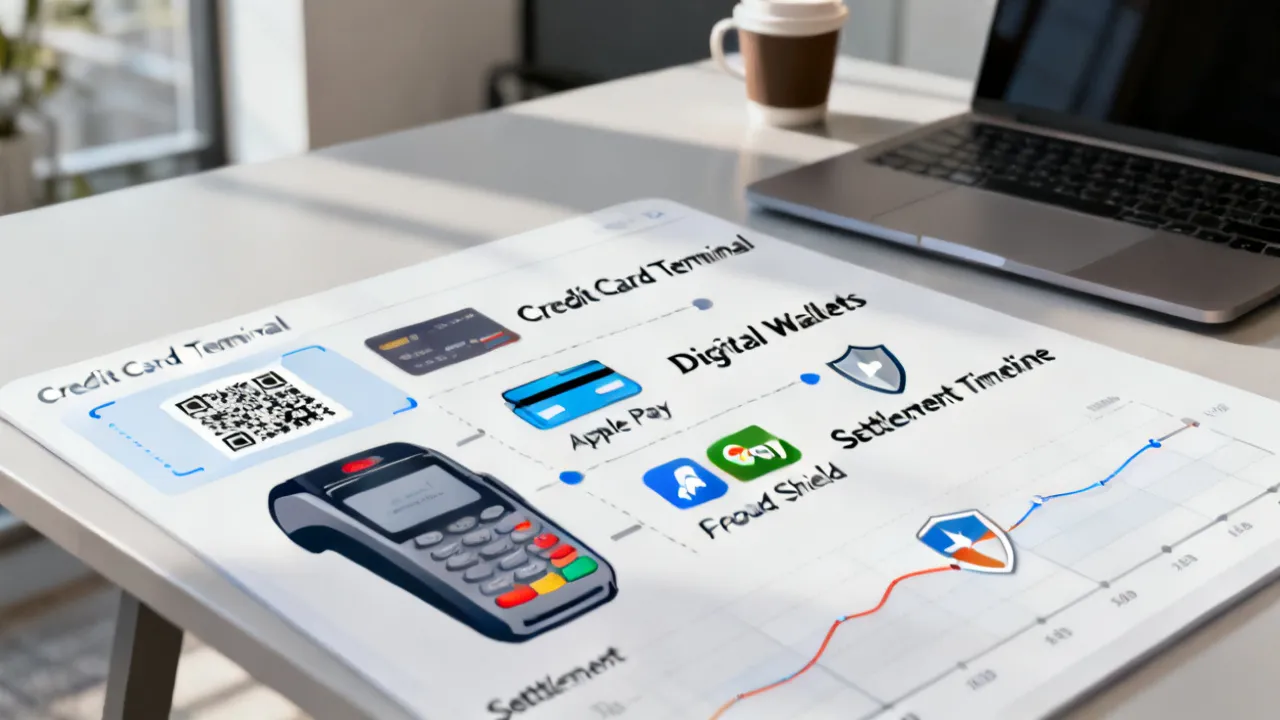
3) How the Payment Ecosystem Typically Works
When someone connects a digital wallet conceptually linked to PayPal-like services, the underlying system usually depends on three layers:
- Identity and risk controls (KYC/AML-related checks, fraud detection, transaction monitoring).
- Payment rails (how money is moved: cards, bank transfers, wallet balances, and local transfer methods where available).
- Settlement and access (how users can spend, receive, hold, or cash out—depending on what the provider permits in their jurisdiction).
Even if a user is “unbanked,” the system still needs a way to verify the user and ensure funds and transactions follow applicable rules. That is why the onboarding portion and supported transaction methods are often the defining factor in whether “Paypal Unbanked” usage is feasible.
To make this more concrete, think of the process like a pipeline:
- Entry: The user signs up and is associated with identity attributes (name, date of birth, address in many cases, and an ID document). The platform may also verify the phone number or email to reduce account takeover risk.
- Risk scoring: The provider evaluates risk signals—location, device patterns, transaction patterns, and known fraud indicators.
- Routing: If a transaction is allowed, the payment system routes the transaction through approved rails. For example, sending money might use a wallet balance; receiving might rely on a card-funded transfer or a locally supported inbound method.
- Settlement: Settlement is the back-office accounting process that ensures funds ultimately end up in the right place and that any partner rails (card networks, local transfer operators, banking partners) reconcile.
- Access: The user interacts with the system—spending with merchant checkout, sending to other users, or cashing out (if permitted).
This is why “unbanked” does not mean “unregulated.” Payment systems can’t safely operate if they only provide an app icon without identity controls. Instead, they provide permitted workflows that can work even when a traditional bank account is not used as the primary gateway.
Another subtlety is that identity and risk controls are not only about initial verification. The provider can trigger additional verification when transaction behavior changes. For example, if a user starts receiving significantly higher amounts than before, or if funds are routed unusually, the system may request more documentation. This is a normal risk-management approach in regulated payment environments.
4) Provider Policies and Jurisdiction Matter More Than Marketing Terms
“Paypal Unbanked” is top treated as a descriptive concept rather than a single universal product feature. In practice, availability depends on:
- Country/region eligibility for onboarding, receiving, and cash-out options.
- Documentation requirements and supported ID types.
- Supported funding methods (e.g., card-based funding vs. bank transfer vs. other local methods).
- Account limitations that may be placed on newly onboarded or partially verified accounts.
For objective clarity, readers should rely on official provider terms and local regulatory guidance. Payment services commonly publish detailed account and compliance policies, and those documents are the very accurate reference point.
Jurisdiction affects more than just whether you can sign up. It also affects:
- Which funding rails are allowed (for example, some places may support card funding but not certain bank transfers).
- Which withdrawal/cash-out routes are available (some regions may allow cash-out to bank accounts, others may support alternative methods like local transfer partners).
- Whether business accounts have additional requirements (tax IDs, business registration documents, or proof of address).
- How disputes and charge handling are structured (which can vary by transaction type and local rules).
It is also worth noting that provider features can change over time. A region that supported a particular cash-out method a year ago might restrict it later due to compliance updates, partner changes, or risk considerations. Therefore, an “unbanked” approach should be evaluated against the provider’s current and region-specific documentation rather than older blog posts or user anecdotes.
When you read marketing material that mentions “instant payments,” “no bank account required,” or “wallet-first,” treat it as a feature that must be checked against the fine print. “No bank account required” may mean that you can sign up without linking a bank account, but it may still require verification and may still restrict the ways you can fund or cash out. The difference between “sign-up requirement” and “funding/cash-out capability” is a common reason people get surprised later.
5) Risks and Misunderstandings to Avoid
People often search for “Paypal Unbanked” to find shortcuts, but payment compliance is not optional. The very common misunderstandings include:
- Assuming all “unbanked” users can deposit or withdraw without ID—usually incorrect.
- Believing all regions support identical features—feature sets frequently differ by jurisdiction.
- Underestimating transaction monitoring—digital payment platforms routinely monitor patterns and may require additional verification.
- Expecting chargeback-like outcomes without limitations—policy varies by funding source and transaction type.
As an industry observation, these issues stem from mixing “user convenience” with “regulatory compliance.” A responsible guide should separate what is technically possible from what is permitted by policy.
Let’s expand on these misunderstandings with additional practical examples of what can go wrong:
- “I can receive money without verification.” Many systems allow a limited experience at first, but meaningful receiving and spending typically requires verification. If you bypass or fail verification, you might find incoming funds delayed, limited, or reversed.
- “If my friend in another country can do it, I can too.” Features tied to “nearby” rails, partner availability, and regulatory permissions will differ. Even if the same platform name exists, the operational rules can differ.
- “I can send from anywhere using any method.” Some funding instruments or transfer methods may be blocked, especially for higher-risk patterns or mismatched account details.
- “I can ask the system to treat it like cash.” Cash-like behavior (large deposits/withdrawals, repeated conversions, or irregular settlement timing) can be flagged as higher risk. Even legitimate use cases may require documentation if the pattern looks suspicious.
Another misunderstanding is to confuse “unbanked payment” with “anonymous payments.” Compliance requires the provider to identify users and monitor transactions. If someone is searching for anonymity, they may encounter scams or unsafe services. Legitimate “unbanked” pathways do not mean “anonymous”; they mean “accessible without a traditional bank account as your main link.”
Finally, there is the risk of violating provider terms through “workarounds,” such as using third-party agents, nominee accounts, or trying to route payments through unauthorized intermediaries. Even if a workaround seems to solve a short-term need, it can increase risk signals and lead to restrictions or account closure.
6) Industry Context: Why This Approach Exists
Payment platforms are balancing two goals: expanding access to digital commerce and meeting anti-fraud and anti–money laundering standards. Many regulators encourage “proportionate” onboarding, where requirements may scale based on risk and account activity. This approach is broadly consistent with risk-based frameworks referenced by global organizations in the financial sector.
For readers who want objective grounding, a helpful starting point is the general guidance and risk-based compliance principles promoted by bodies such as the Financial Action Task Force (FATF) and national regulators. Payment services also align with local rules that govern customer identification, beneficial ownership in some contexts, and suspicious activity reporting.
In other words, the system is designed to make access possible while maintaining controls. Historically, traditional banking required physical branch presence, extensive documentation, and sometimes relationship-building. Digital payment services sought to reduce those friction points by using remote onboarding, scalable verification, and transaction monitoring systems that improve with time and data. However, digital access doesn’t eliminate risk, so the compliance layer remains central.
It can also help to view “unbanked” workflows as part of a broader inclusion strategy. People who are excluded from traditional banking may still have economic activity—selling goods online, freelancing, receiving support transfers, paying for services. If you create only bank-account-based payment systems, you limit commerce participation. Therefore, payment providers often build alternative routes that can accept users and funds in a compliant way.
Yet there are tradeoffs. To prevent fraud, providers may apply lower limits at first, require additional documents for higher amounts, or restrict cash-out depending on available rails. These controls are not simply bureaucratic; they reduce losses for both the provider and legitimate customers. Fraud prevention also protects the overall payment ecosystem from becoming a magnet for scams.
Another industry factor is partner dependencies. Payment providers often rely on external partners to process cards, local transfers, or cash-out. If a partner changes their risk appetite or regulatory requirements, the payment provider may adjust supported features. This is one reason “unbanked” access can be stable in one timeframe and then change later—without the user doing anything wrong.
7) Supplement: Comparison Table, Source, Step-by-Step Guide, and Conditions
The “Paypal Unbanked” topic can be difficult because people conflate account access with funding access. Below is a practical supplement that compares typical pathways, summarizes commonly referenced compliance sources at a high level, and provides a step-by-step approach readers can adapt to their situation.
| Pathway / Goal | What It Usually Requires | Typical Constraints | Top Use Case |
|---|---|---|---|
| Onboarding a wallet account without a traditional bank account as the primary link | Verified identity documentation; region eligibility; device/account security setup | May start with limits until verification steps are completed | Receiving payments for services or e-commerce transactions |
| Adding funds via permitted non-bank methods (where available) | Supported funding instrument(s) approved by the provider in the user’s region | Availability depends on local rails; may be restricted for certain account states | Making purchases or maintaining a spendable balance |
| Cash-out or withdrawal to usable payment destinations | Compliant withdrawal destination; ongoing monitoring; additional verification if triggered | Some methods may not be available in all jurisdictions; processing time can vary | Converting balances into accessible funds |
| Handling cross-border or higher-risk transfers | Stronger verification; clear transaction purpose; consistent usage patterns | Potential for enhanced checks; increased scrutiny on irregular activity | Legitimate international commerce with accurate records |
Sources (High-Level, Objective References)
- FATF (Financial Action Task Force): Risk-based approach to AML/CFT and customer due diligence principles.
- Regulators in the user’s jurisdiction: Customer identification, transaction monitoring, and reporting obligations that payment services must follow.
- Payment provider’s official account terms and policies: The definitive source for eligibility, limits, supported funding/withdrawal methods, and verification steps.
To use these sources effectively in real decision-making, you can treat them as three layers of authority:
- Global principle layer (e.g., FATF): Explains the general risk-based logic.
- Local rule layer (national regulators): Defines what must happen in that country/region.
- Provider implementation layer (terms/policies): Specifies how the provider chooses to apply those rules to each product, limit bracket, and funding rail.
Step-by-Step Guide (Generalized, Non-Regional Assumptions)
- Confirm regional eligibility: Check whether the service supports onboarding and receiving activities in your location (“nearby”).
- Prepare identity information: Have the required personal documents ready and ensure they are readable and current.
- Create and secure the account: Use strong passwords, enable available security features, and verify email/phone if requested.
- Complete verification: Provide identity details promptly; do not attempt to circumvent checks.
- Choose a supported funding/receiving method: Select options that are officially allowed for your account type in your region.
- Start with low-risk activity: Begin with modest transactions to confirm correct routing and account functionality.
- Monitor transactions and statements: Review fees, limits, and any notifications about verification or compliance requirements.
- Maintain consistent records: Keep receipts or invoices where relevant—especially for business use.
To make the step-by-step even more practical, here are some additional “decision checks” you can apply while doing each step:
- Before onboarding: Verify what account types exist (personal vs business) and which one matches your goal. If you’re receiving client payments, you may need the business-related workflow depending on local rules and provider policy.
- During verification: Ensure your address and name formatting match what appears on your document. Small mismatches can lead to delays.
- During funding setup: Confirm that your chosen funding instrument is supported not only in general, but for your specific account status. Providers sometimes allow limited funding before full verification is complete.
- During early transactions: Keep transaction descriptions truthful and consistent. Providers often look at transaction purpose categories and behavior patterns.
Conditions and Requirements (What Usually Applies)
- Identity verification is generally required for very meaningful account functionality.
- Limits may apply initially and can change after verification or over time.
- Supported funding/withdrawal methods vary by jurisdiction and account status.
- Transactions are monitored for fraud and compliance; unusual patterns can trigger additional checks.
- Business activity may require extra documentation (e.g., tax or business identifiers) depending on region rules.
It’s useful to interpret “limits” in two ways:
- Quantitative limits: Maximum amount per transaction or per month.
- Qualitative limits: Some payment types might be restricted for unverified or partially verified accounts.
Providers may also place temporary restrictions if the system detects unusual activity, even when the account is otherwise legitimate. In those cases, completing any additional verification requests and clarifying the source/purpose of funds tends to be the appropriate response.
8) Practical Scenarios: How Readers Commonly Use “Paypal Unbanked” Concepts
To make the topic concrete, here are realistic, policy-aware scenarios readers often care about. These examples do not assume any specific pricing or feature set; they focus on decision points and typical controls.
Scenario A: Receiving payments as a affordablelancer
A affordablelancer often wants a reliable method to collect client payments without using a traditional bank account as the primary link. In a “Paypal Unbanked” mindset, the affordablelancer should focus first on:
- Whether they can receive payments in their region (“nearby”).
- How identity verification affects receiving limits.
- What withdrawal/cash-out options exist for spending the received funds.
From an industry viewpoint, the smoothest experience usually comes from completing verification early and using consistent invoicing practices.
To expand this scenario, consider the following practical workflow an affordablelancer might follow:
- Clarify the payment model: Are you receiving one-off payments from clients, or are you receiving recurring monthly retainers?
- Confirm recipient details: Ensure your name and account details match what clients see at checkout or in payment instructions.
- Keep proof of service: For business continuity and dispute prevention, keep a record of deliverables, dates, and invoices.
- Plan for access to funds: Decide how you’ll spend the funds—merchant payments, peer-to-peer payments, or cash-out (if available).
Another important consideration is dispute risk and refund expectations. If you deliver digital services, disputes may center around service quality or delivery timeline. While dispute handling is beyond the definition of “unbanked,” it matters operationally: you want a payment setup that supports resolving issues.
Scenario B: Buying online services without a bank deposit account
Some users want to pay merchants using a digital wallet balance funded through permitted mechanisms. This is usually less about “unbanked access” and more about whether the provider allows:
- Funding the balance with a supported instrument available in “nearby.”
- Spending through merchant checkout flows permitted for that account.
- Handling currency conversion or regional restrictions for certain merchants.
The key is to rely on what the provider’s terms state for your exact account and location.
When exploring this scenario, people often ask whether they can “top up” without a bank. Depending on the provider and region, top-up may be possible via cards, local payment methods, or other rail partners. The operational reality is: even if you don’t have a bank deposit account, you still need a method to add value to your wallet. Payment systems cannot create liquidity out of nothing; they must move value through supported instruments.
It also helps to differentiate between:
- Wallet spend: Paying merchants using wallet balance.
- Card-based payment: Paying merchants by charging a card linked to the payment account.
- Bank-based payment: Pulling funds via bank transfer (which you may want to avoid).
In many “unbanked” setups, the best path is to choose a funding method that does not require a bank deposit account as the primary gateway. But you must still verify that method is supported for your region and that your account status allows it.
Scenario C: Cross-border usage and family remittances
Cross-border use may introduce additional verification or limitations. Responsible expectations include:
- Possible enhanced screening for international transfers.
- Differences in fees and settlement timing.
- Requirement for accurate recipient details and transaction purpose.
As a scholar of fintech systems, I would emphasize that cross-border transactions are often where “unbanked” labels become misleading—because the payment rails and compliance burdens become more complex.
To make this scenario more complete, consider how remittances often differ from e-commerce payments:
- Frequency and pattern: Remittances might be regular (monthly) or irregular (emergencies). Both patterns can be legitimate, but irregular spikes may trigger reviews.
- Recipient identification: Accurate names and details matter because funds must be reconciled across borders.
- Source of funds clarity: Providers may ask for clarification when funds originate from high-risk sources or when the transaction looks like it could be money laundering or fraud.
In practice, a compliant approach means you should keep documentation that supports legitimacy (for example, basic records explaining remittance purpose). Even if you are “unbanked,” the provider may still require enough information to comply with rules.
Another key detail is that cross-border transfers can involve multiple actors: payment provider, intermediary networks, local transfer systems, and sometimes banking partners. Each actor may impose timelines and restrictions. Therefore, “unbanked” cross-border usage can be feasible but might not be as simple as domestic transfers.
9) Pricing, Supplier Details, and “What to Expect” (Without Speculation)
You asked for price information and supplier details. In the absence of specific numbers, it is top practice to avoid guessing fees or naming suppliers in a way that could be inaccurate. Payment providers commonly structure costs around:
- Transaction fees depending on payment type and region.
- Currency conversion spreads when multi-currency settlement applies.
- Withdrawal or cash-out fees where those are permitted.
- Charge handling and dispute procedures which can affect outcomes.
Supplier detail framing (objective): In a “Paypal Unbanked” context, the “supplier” is typically the payment service provider plus any partners that provide the underlying funding/settlement rails (for example, card networks, local transfer operators, or banking partners where used). Exact partner identities are usually detailed in provider documentation or transaction disclosures.
If you share your target country/region and whether you mean personal payments, business invoices, or cash-out, I can help draft a more specific section that aligns with the exact provider policy for “nearby,” still without making unverified claims.
To still help you “what to expect” without speculation, you can ask the right questions directly to the provider’s official materials:
- Where are the fee schedules published? Look for “Fees,” “Pricing,” or “Transaction fees” pages tied to your region.
- Are there different fees for receiving vs sending? Many payment systems treat receiving and sending differently.
- Are there extra fees for withdrawal/cash-out? Cash-out can include fixed and variable components.
- Do merchant payments include additional processing? Some merchant integrations charge differently.
- How are disputes handled and what evidence is required? This can affect the practical cost of an issue even if no explicit fee exists.
In addition, be mindful that “unbanked” workflows sometimes lead to extra friction costs: delayed processing time, the need to complete verification steps before you can withdraw, or temporary limits that affect how quickly you can access funds.
10) Expert Checklist: How to Evaluate a “Paypal Unbanked” Setup Responsibly
- Eligibility: Confirm the service supports your use case in “nearby.”
- Verification: Understand which ID documents are accepted and whether you can complete verification promptly.
- Limits: Identify initial limits and what activities raise or lower them.
- Funding and withdrawals: Confirm which methods you can use—no assumptions.
- Fee transparency: Check official fee schedules for transactions and conversions.
- Dispute handling: Review how disputes are processed and what evidence is required.
- Security controls: Enable MFA and follow account security top practices.
- Fraud prevention: Avoid “workarounds” involving third parties, which can breach terms and increase account risk.
To deepen this checklist for real-world decisions, here are additional evaluation points you can apply:
- Account type fit: Personal vs business changes documentation and sometimes the way receiving is handled.
- Recipient behavior: If you’re receiving payments from multiple clients, test whether your receiving flows are consistent (and whether you need to provide invoices or standard payment links).
- Refund and reversal expectations: Confirm whether refunds go to the same funding route or handle differently for “unbanked” accounts.
- Settlement timelines: Receiving and cash-out can take different amounts of time. Look for “processing time” language.
- Customer support channels: Ensure you know how to contact support if verification or cash-out is delayed.
- Data privacy and permissions: Review what information the provider shares and what consents you must grant for partner rails.
Security is especially relevant in “unbanked” narratives because users may rely more heavily on wallet access. If an account is compromised, there may be fewer alternative financial options available. Therefore, MFA, device security, and phishing-resistant behaviors become core risk controls.
Also, be cautious about third-party “top-up agents” or unofficial services. Some can appear to offer easy funding without compliance. These services may violate provider terms or expose you to scams. Even if they seem to work at first, they may increase risk scores and cause issues later.
11) FAQs (Inverted Pyramid Style: Very Critical First)
Q1: Does “Paypal Unbanked” mean I can use a payment account without any identity checks?
No. In very compliance frameworks and provider implementations, meaningful account functionality generally requires identity verification and ongoing monitoring, even if you do not hold a traditional bank account.
Q2: Are features the same everywhere for “Paypal Unbanked” users?
Not necessarily. Eligibility, available funding methods, receiving options, and withdrawal routes often differ by jurisdiction. For readers, the very accurate approach is to verify what is offered in “nearby.”
Q3: What funding options typically exist if I don’t have a bank account?
It depends on what the provider permits in your region. Some users rely on supported instruments other than bank transfers. The key is to choose only from officially supported methods for your account status.
Q4: Can I cash out my balance if I’m “unbanked”?
Cash-out availability varies widely. Some regions support certain withdrawal methods, while others restrict them. You should review the provider’s withdrawal policy for your account and “nearby.”
Q5: Are there limits on “unbanked” or newly verified accounts?
Frequently, yes. Many platforms apply limits to reduce risk until verification is complete and account history becomes more established. These limits and thresholds should be confirmed from official policy documentation.
Q6: Is there any way to avoid compliance checks for “Paypal Unbanked” usage?
Not in a legitimate, good manner. Attempts to circumvent controls typically violate terms and can lead to restricted access or account closure.
Q7: How do I reduce the risk of failed transactions?
Complete verification, ensure accurate recipient details, use supported funding methods, start with smaller test transactions, and keep transaction purpose consistent with what the provider requires.
Because FAQs are often where misinformation spreads, here are a few additional “FAQ-like” clarifications readers frequently need:
- “Does ‘unbanked’ mean I can ignore fees?” Fees may still exist for transactions, currency conversion, or withdrawals. Unbanked doesn’t remove the cost structure of payment processing.
- “Can I receive large payments right away?” Large volume may require additional verification or may be capped early. Start with small tests and scale responsibly.
- “Will my account be closed if I use it differently than expected?” If your usage triggers risk flags—especially patterns that look like fraud—providers can restrict accounts. Honest, consistent usage with documentation helps.
12) Conclusion: Treat “Paypal Unbanked” as Access Plus Compliance
The phrase “Paypal Unbanked” captures a real consumer need: participation in digital commerce without traditional banking being the sole entry point. Yet responsible adoption requires an evidence-based mindset. Digital payment platforms typically still rely on identity verification, compliance screening, supported funding/settlement rails, and clearly defined account limits—especially in “nearby.”
If you want, tell me the country/region you mean by “nearby” and whether your priority is receiving, spending, or cash-out. I can then tailor the guide into a more targeted workflow checklist aligned to the very relevant provider policies and common compliance requirements—without relying on unverified claims.
To close with a practical framing: a good “unbanked” setup is not a loophole; it is a carefully designed workflow that replaces bank account dependency with permitted digital rails. If you approach it that way—by checking eligibility, completing verification, using approved funding methods, and maintaining consistent records—you typically get the best chance at smooth account operation.